Azygia lucii
Taxonomy
Azygia lucii (Müller, 1776) is a species of trematode (fluke) classified within the phylum Platyhelminthes, class Trematoda, order Plagiorchiida, and family Azygiidae. As a parasitic helminth, this species has been the subject of research concerning its reproductive biology, specifically the micromorphology and ultrastructure of vitelline cells and the mechanisms of vitellogenesis. Such studies are significant for understanding the regulation of fecundity in parasitic flatworms. Preserved specimens of A. lucii are maintained in various scientific collections, including those at the Naturalis Biodiversity Center and the Yale University Peabody Museum.[1][2]
Visual Description
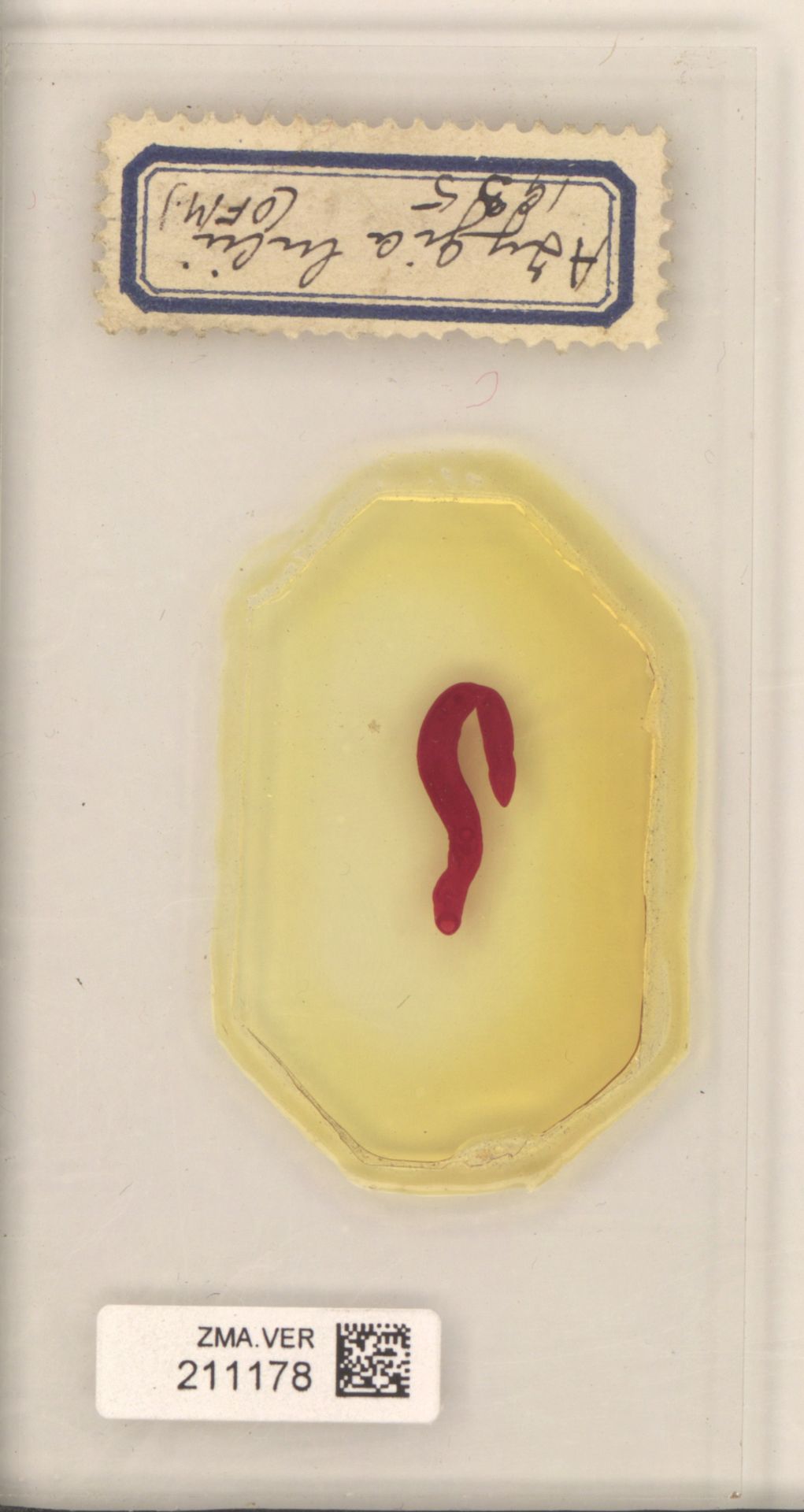
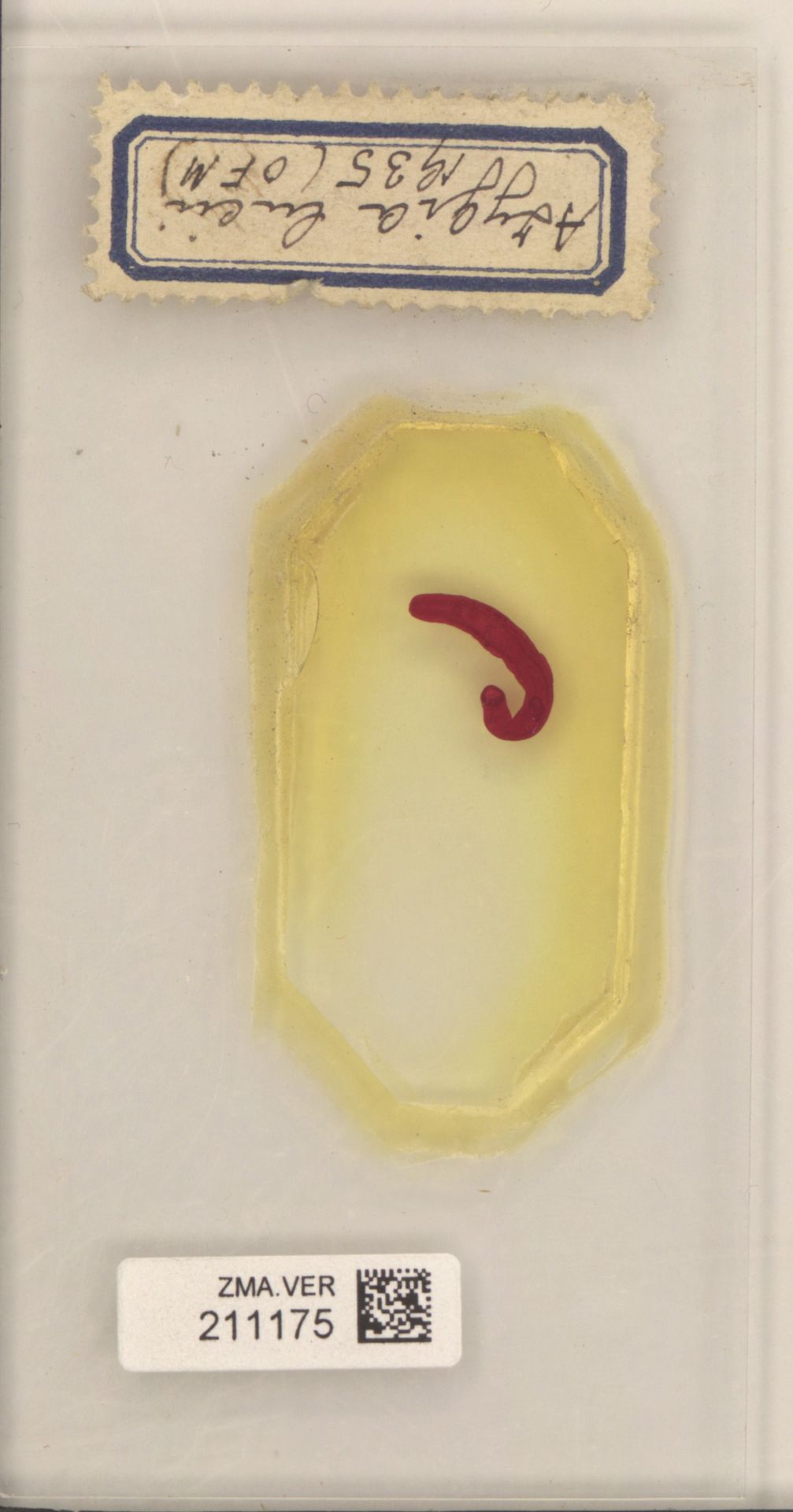
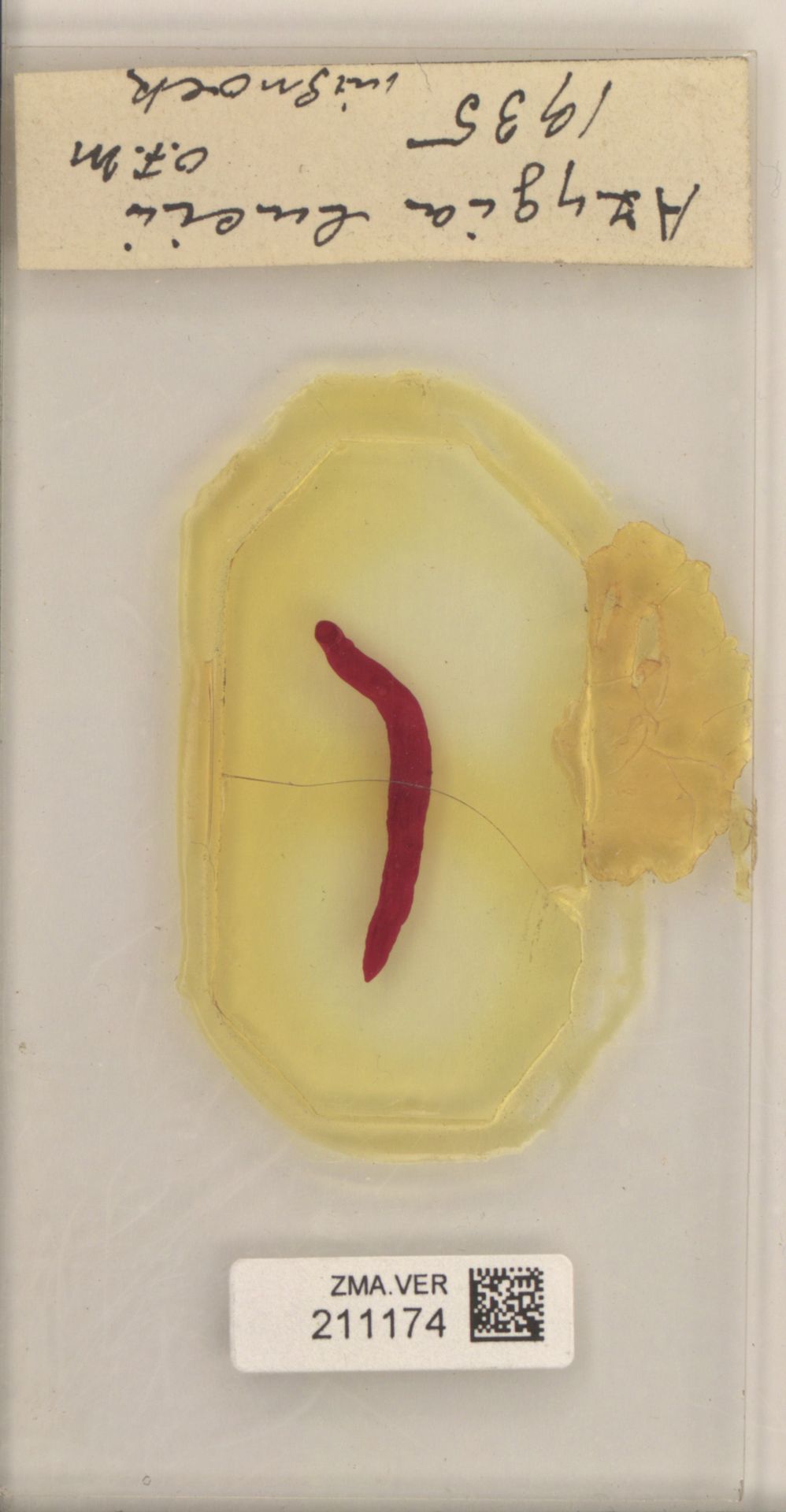
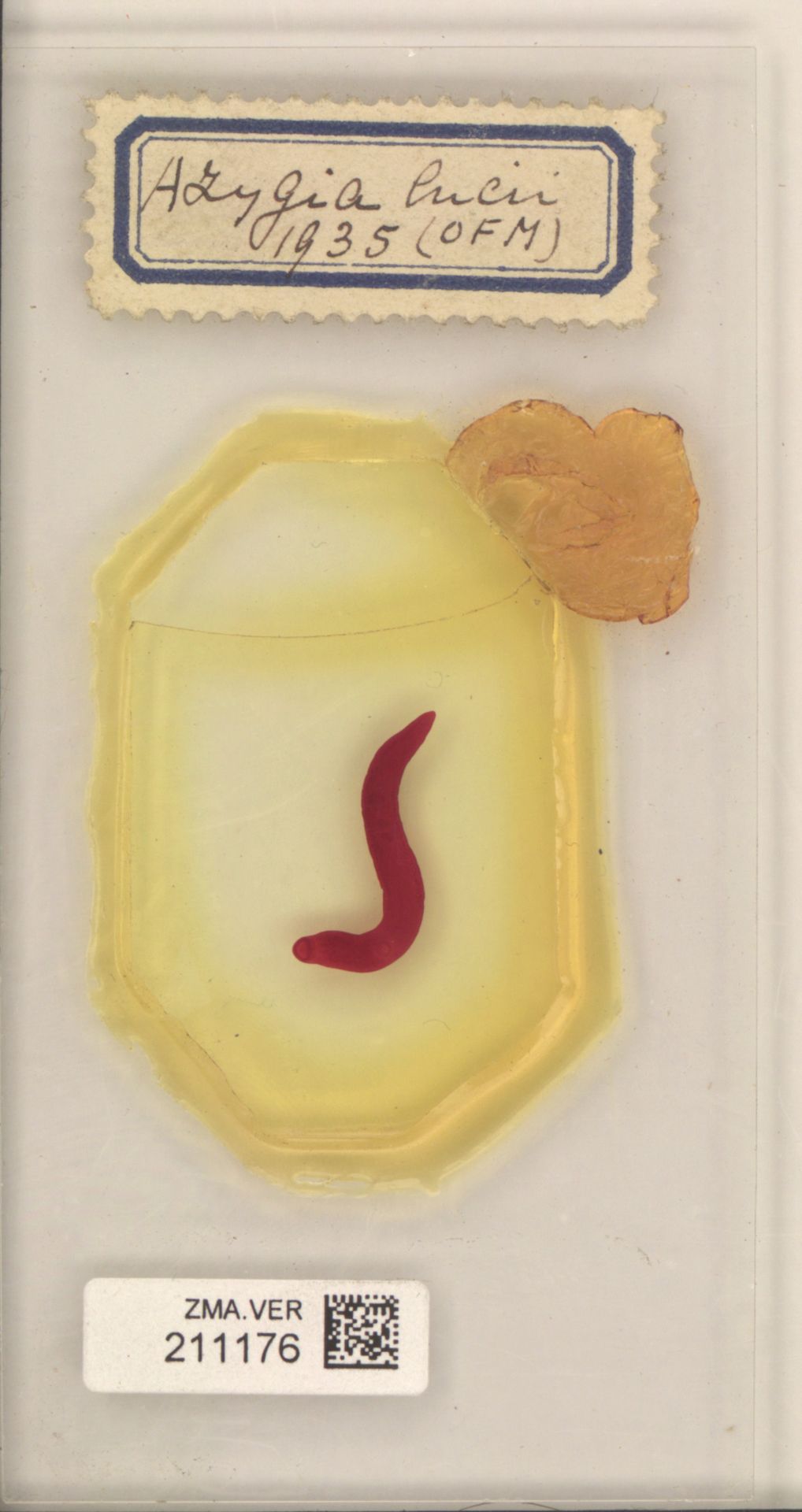
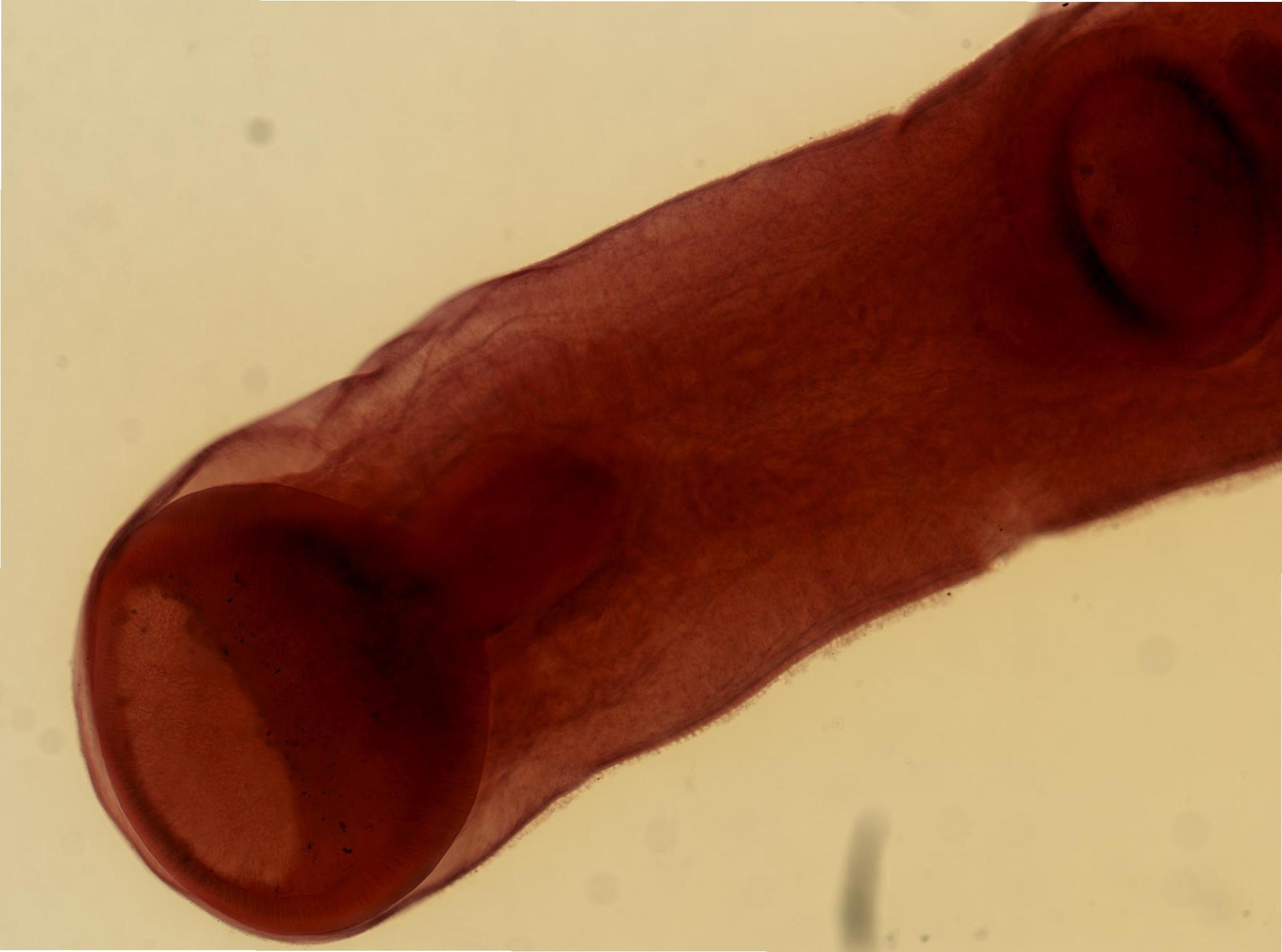
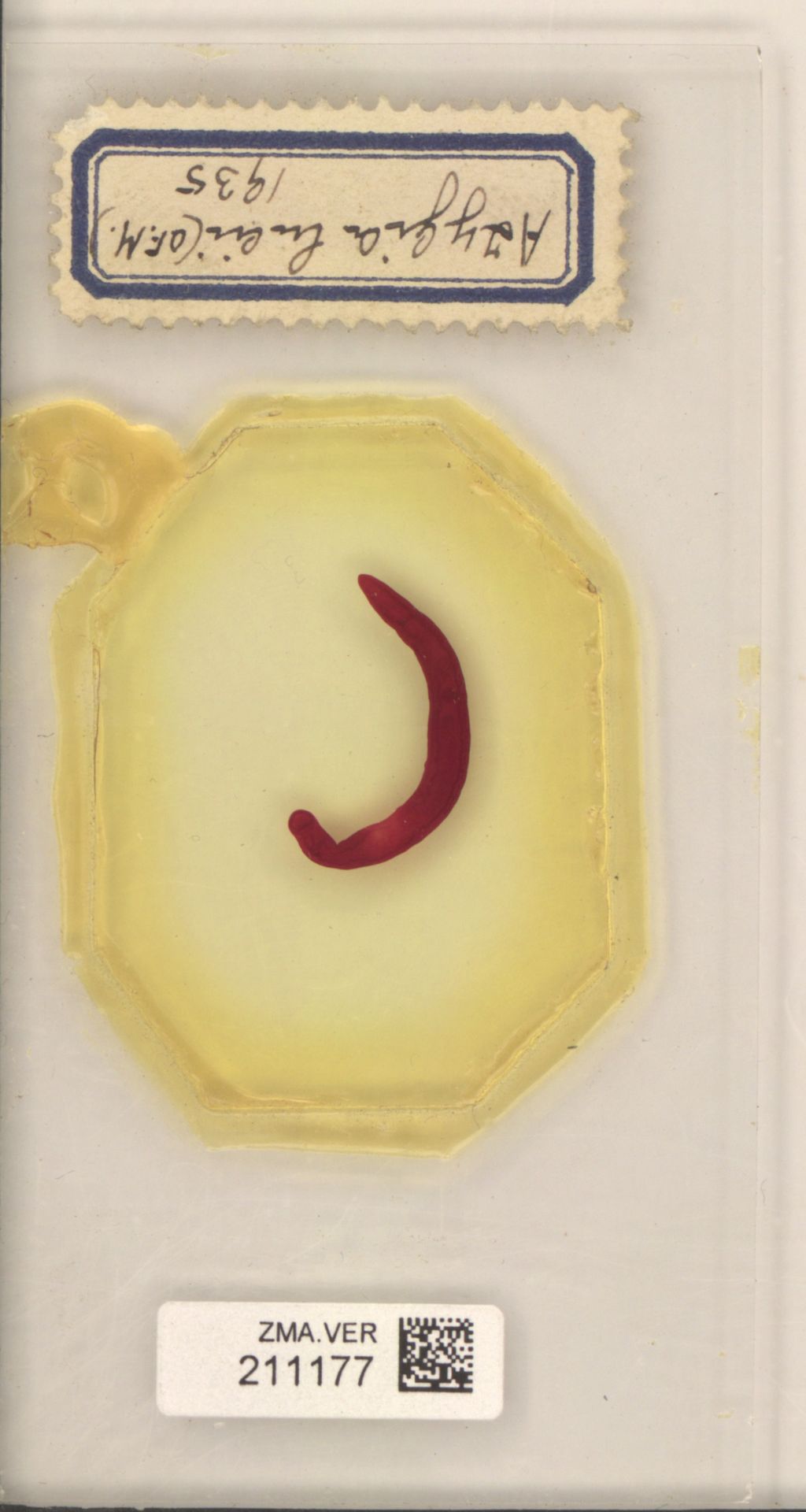
Azygia lucii is an elongated, flattened, worm-like trematode. Preserved specimens typically appear reddish when stained and mounted. The body is characterized by a distinct, circular oral sucker located at the anterior end, followed by a second, larger circular structure, the ventral sucker or acetabulum, positioned along the body. The internal tissues are dense, reflecting the complex internal anatomy typical of the class.
Gallery
References
- ↑ Rimma Ualiyeva; Sayan Zhangazin; Indira Bulatovna Altayeva. Structural Organization of Vitelline Cells of Trematode with Undifferentiated Body of Azygia Lucii (Muller, 1776). OnLine Journal of Biological Sciences. 2022. https://doi.org/10.3844/ojbsci.2022.10.17.
- ↑ Dataset view for Animalia / Platyhelminthes / Trematoda / Plagiorchiida / Azygiidae / Azygia / lucii constructed from imageomics/TreeOfLife-200M records under this taxonomic path. Hugging Face Datasets. https://huggingface.co/datasets/imageomics/TreeOfLife-200M