Azygia
Taxonomy
Azygia is a genus of digenean trematodes within the family Azygiidae, order Plagiorchiida, and class Trematoda. Established by Looss in 1899, the genus currently comprises approximately 29 recognized species, including Azygia lucii, A. tereticollis, A. longa, and A. angusticauda. These flatworms are widely distributed across Europe, North America, and Southeastern Asia, with occurrence records spanning a broad range of latitudes and longitudes.[1][2][3][4][5]
Biology and Ecology
Members of the genus Azygia are parasitic flukes that infect a diverse array of predatory fish hosts, such as Amia calva, Esox lucius, E. masquinongy, Sander canadensis, Salvelinus fontinalis, Micropterus dolomieu, M. salmoides, Morone americana, Ambloplites rupestris, and Catostomus commersonii. Despite their prevalence, they remain relatively understudied regarding their population ecology, molecular epidemiology, and phylogenetic relationships. Genomic characterization of Azygia hwangtsiyui has revealed a circular mitochondrial genome of 13,973 bp, which encodes 36 genes and exhibits a distinct nucleotide composition bias. Phylogenetic analyses based on protein-coding genes suggest that Azygia occupies a unique clade, showing no close affinity to other known trematode families.[1][2]
Visual Description
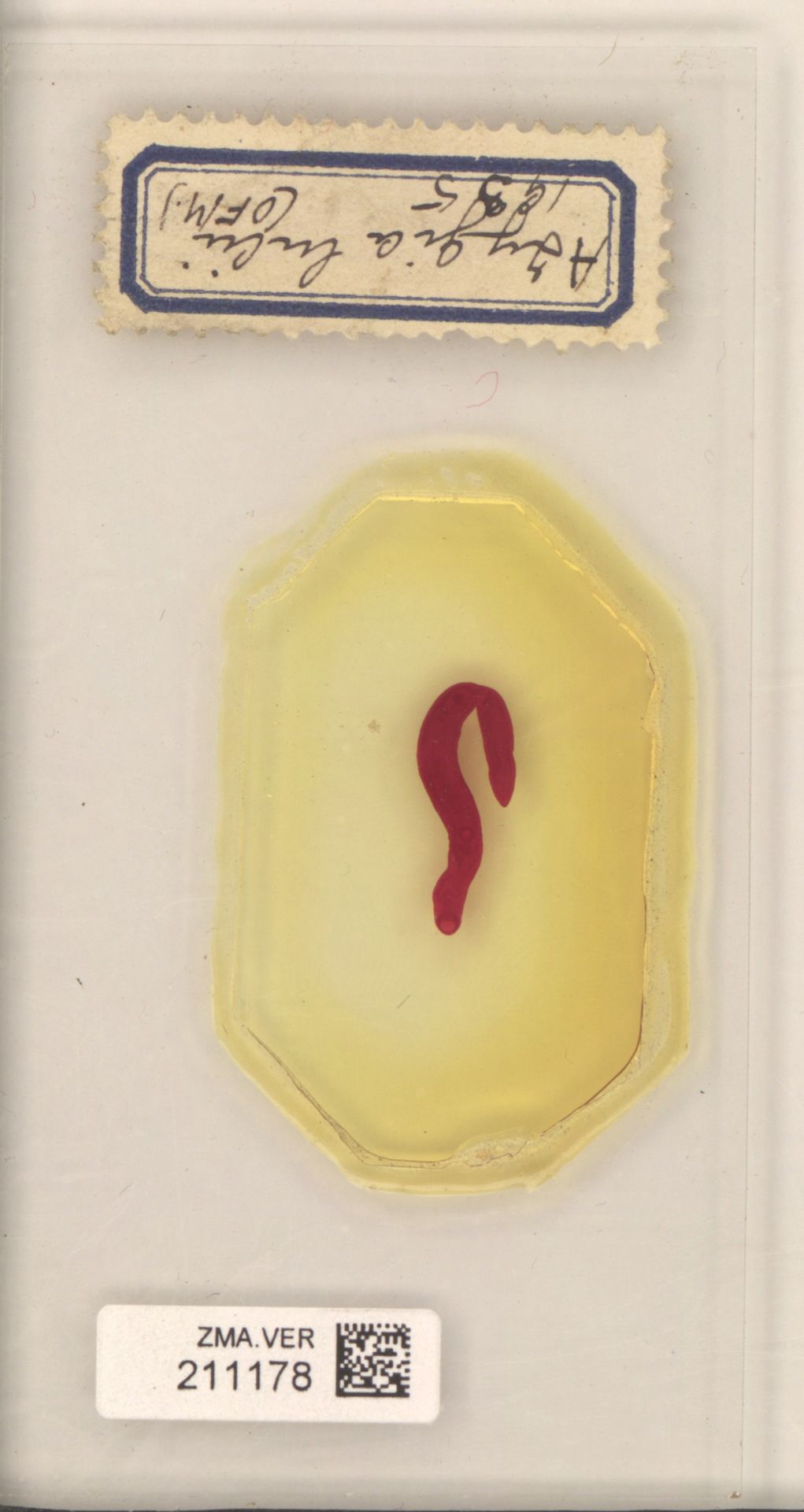
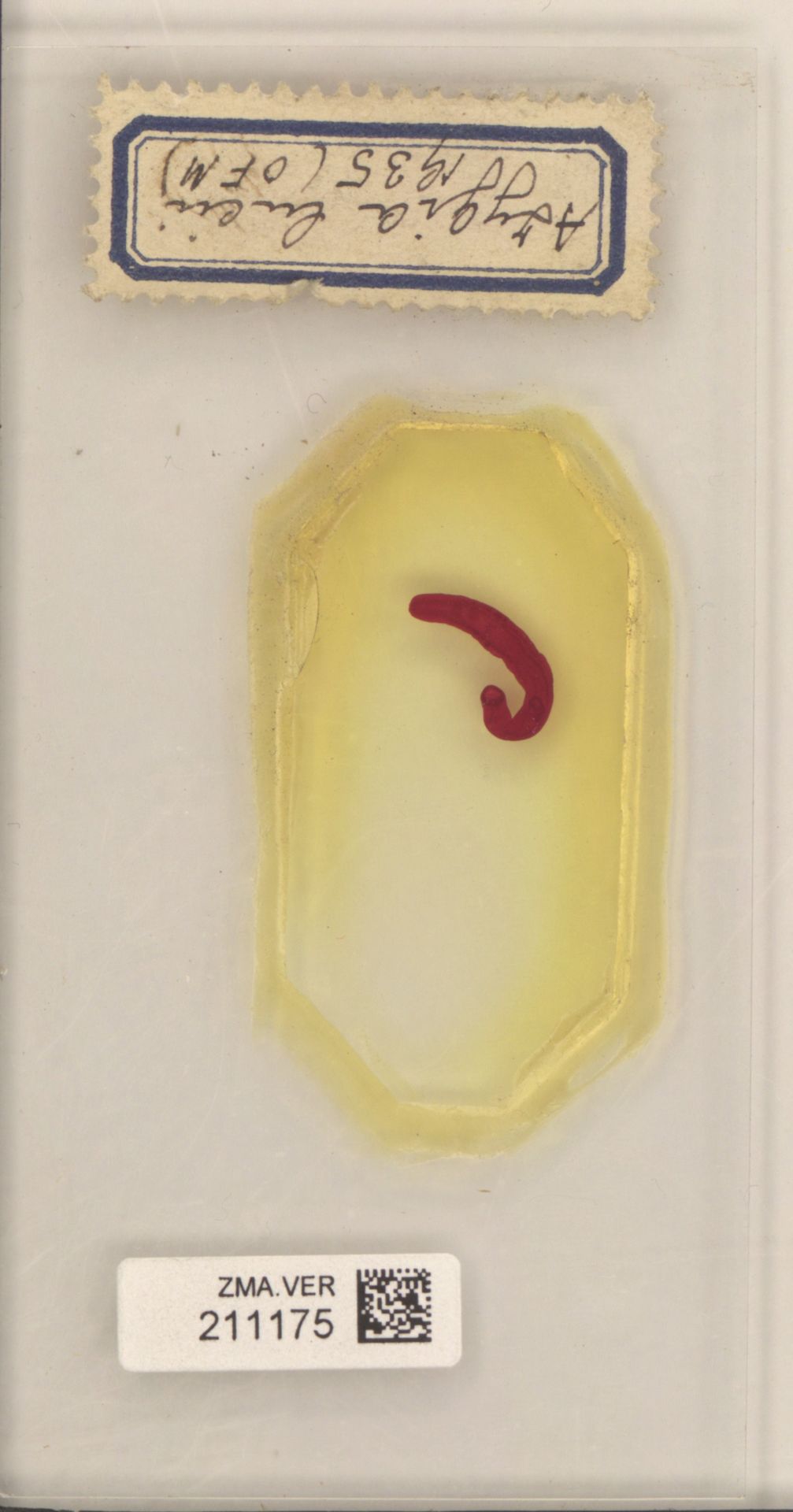
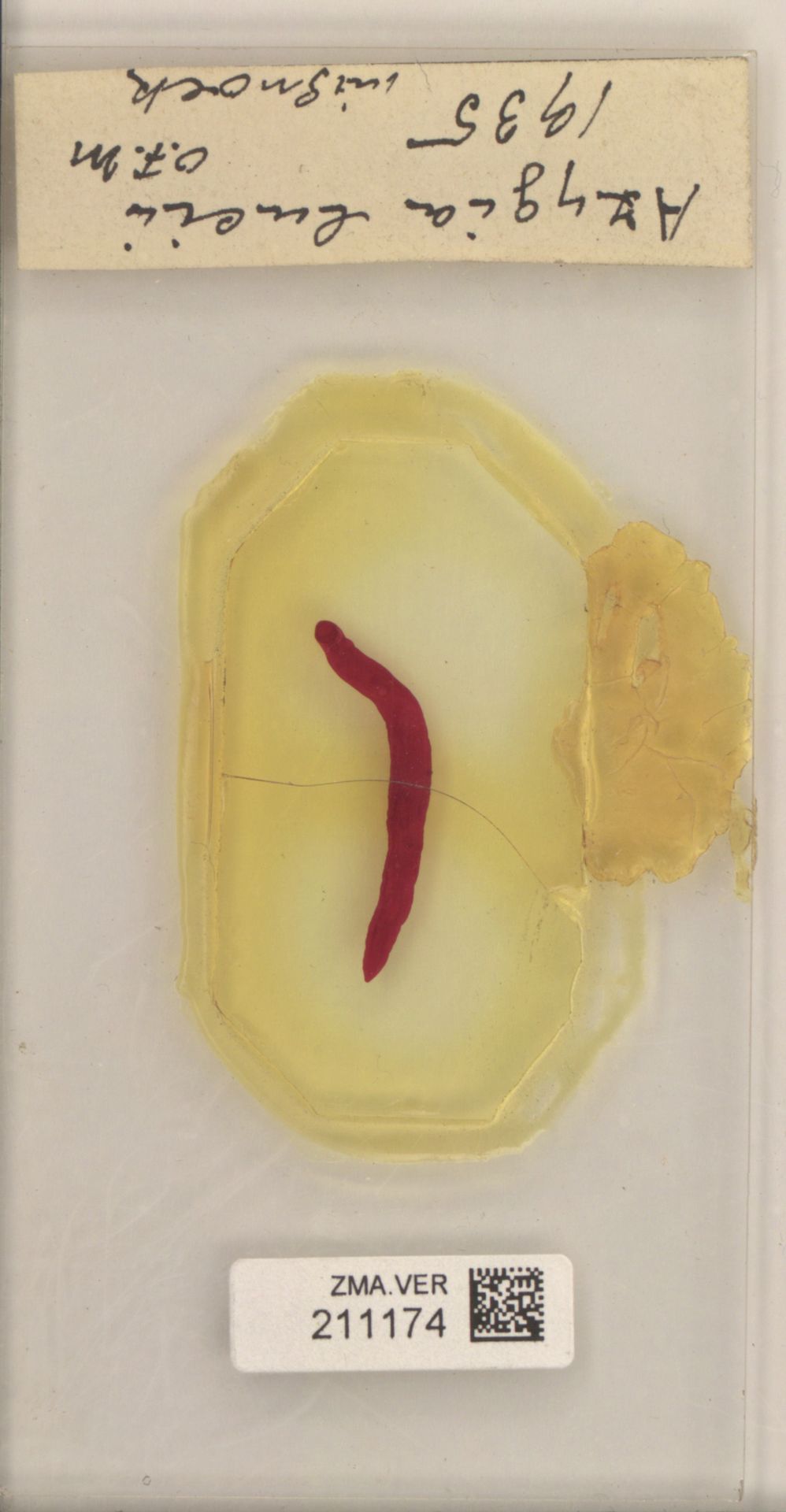
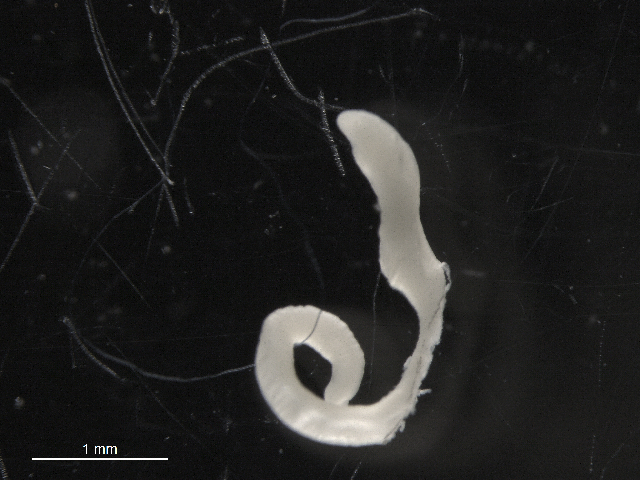
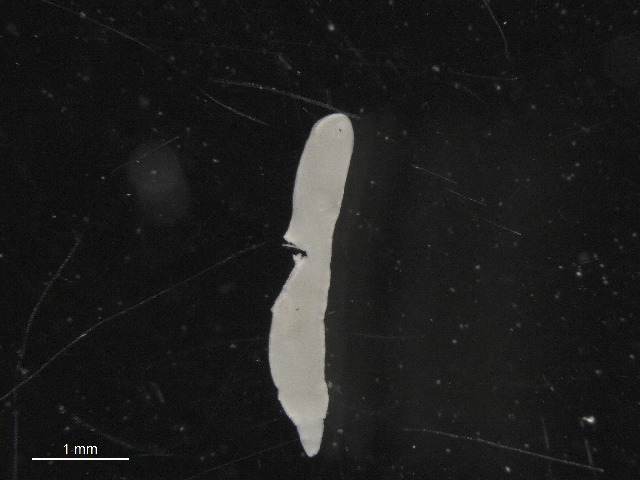
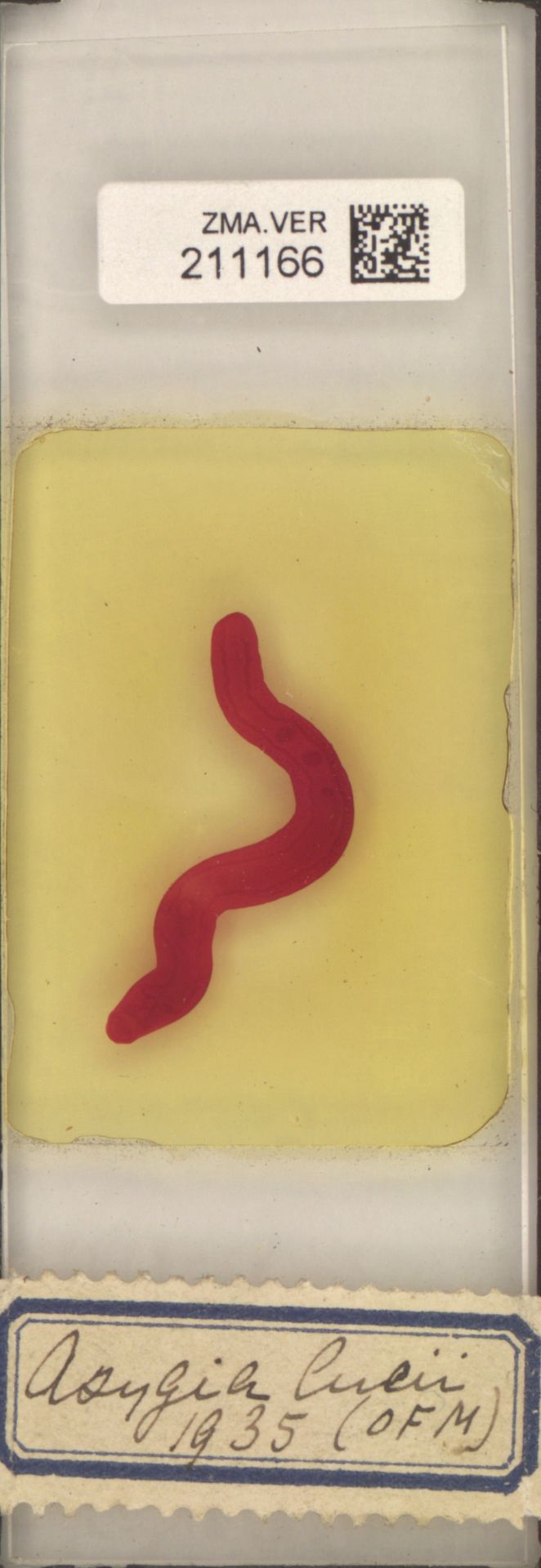
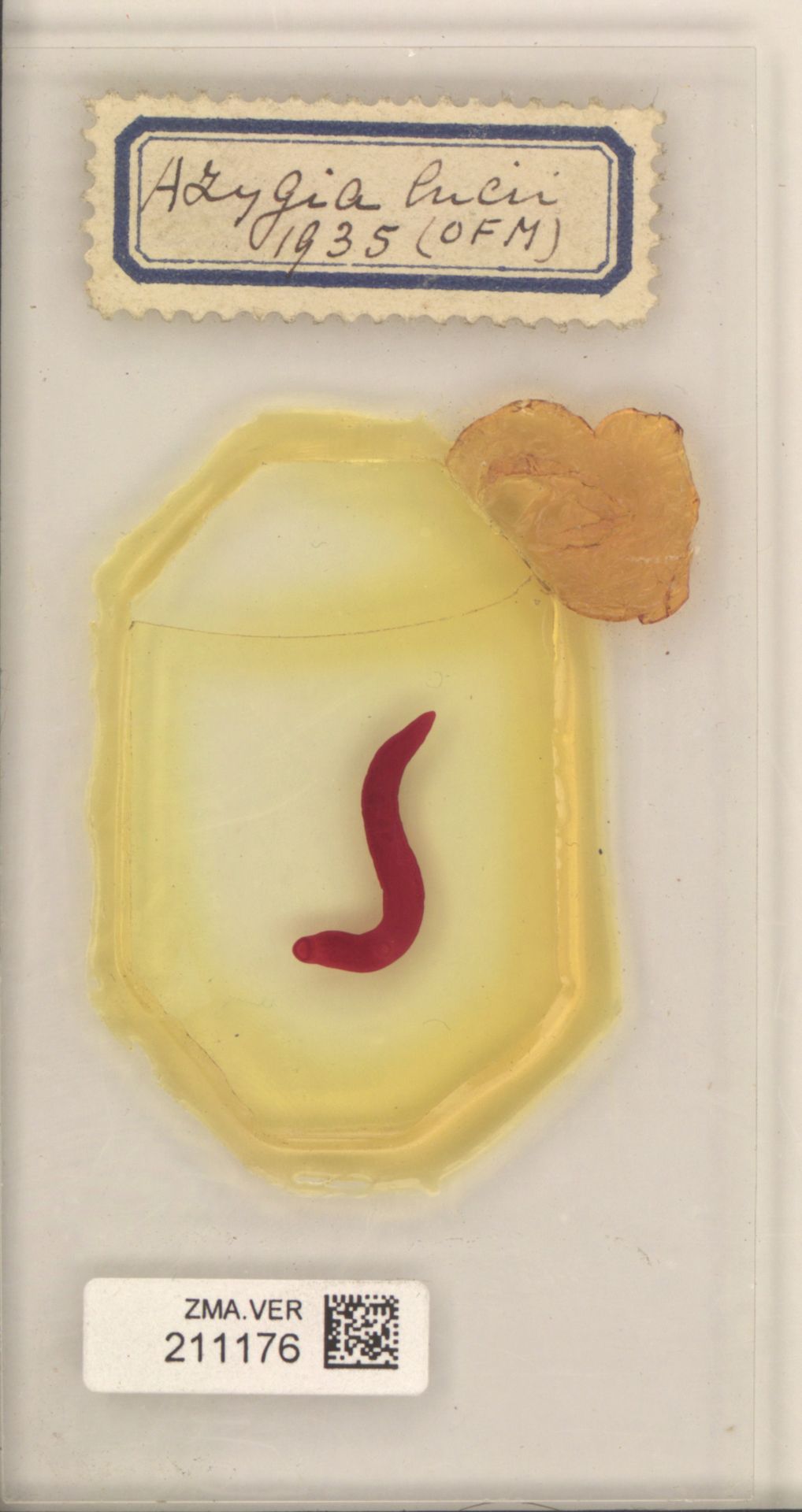
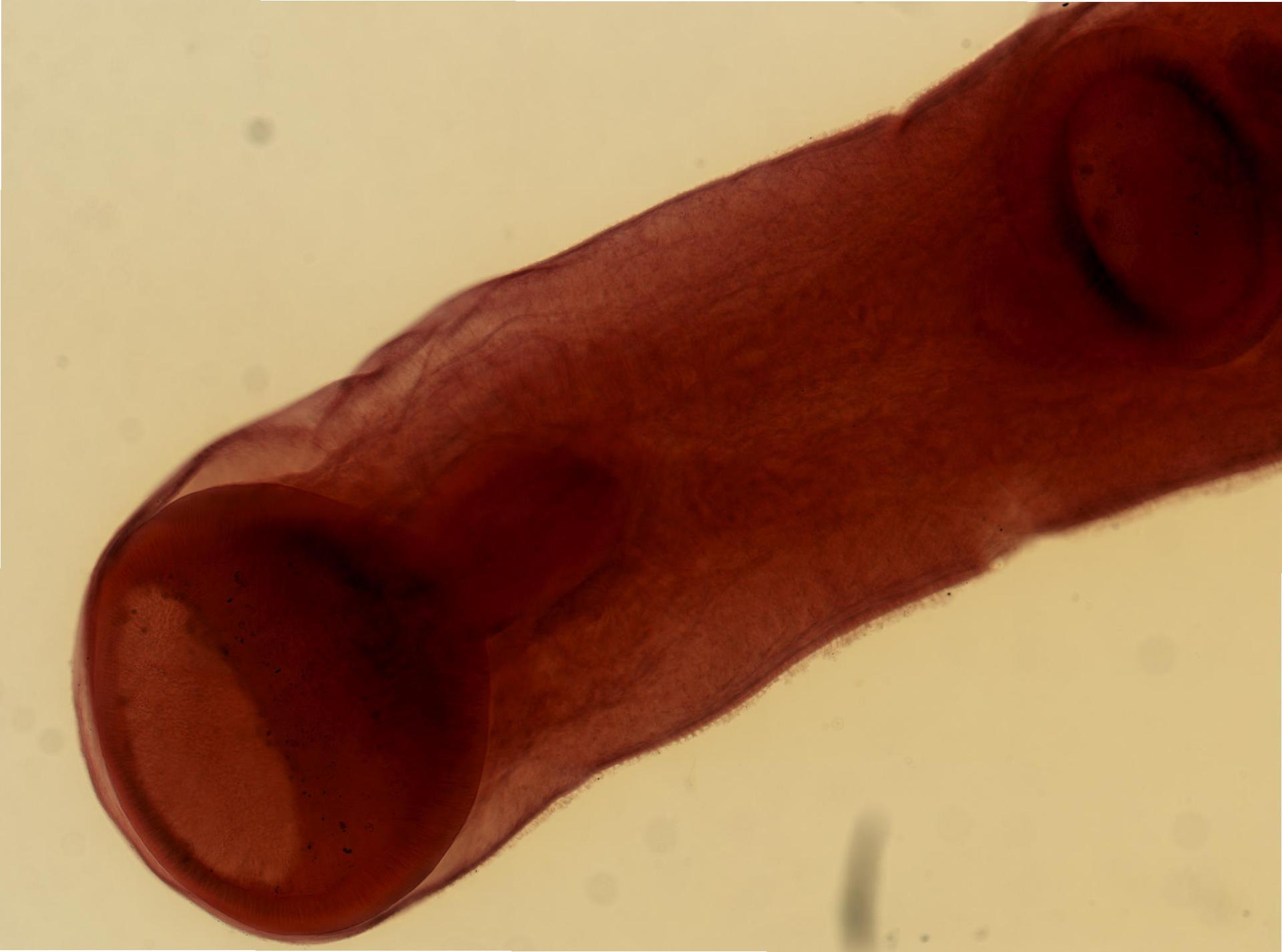
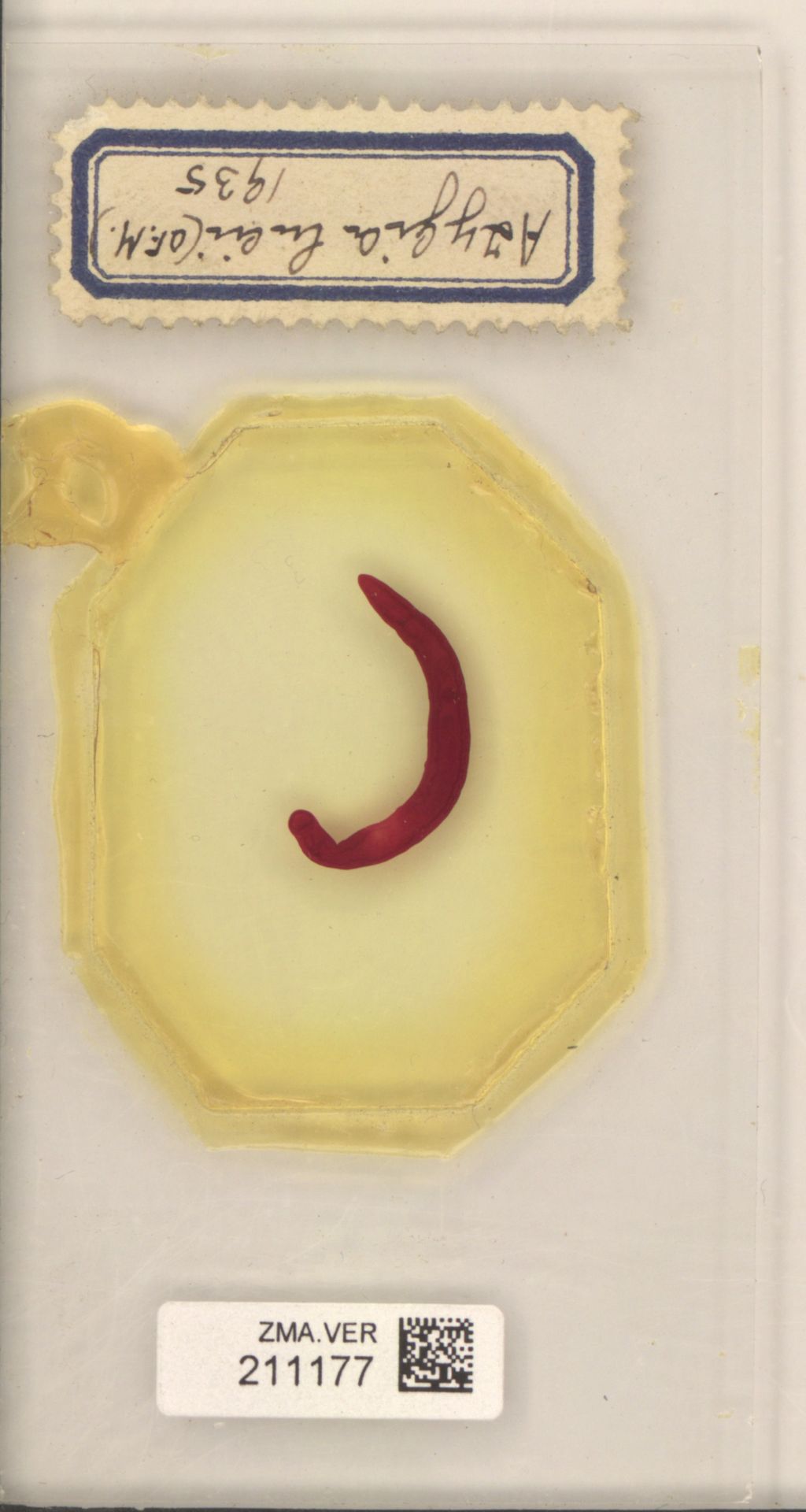
Specimens of Azygia are typically elongated, flattened, and worm-like in morphology. When preserved and stained for histological examination, they often exhibit curved, S-shaped, or C-shaped postures. The body wall is smooth, and the anterior end features a prominent, circular oral sucker, followed by a ventral sucker (acetabulum) located further along the body. Unstained specimens appear pale or translucent against dark backgrounds.
Gallery
References
- 1 2 Yuanan Wu; Jinwei Gao; Xiaofei Cheng; Min Xie; Xiping Yuan; Dong Liu; Rui Song. Characterization and comparative analysis of the complete mitochondrial genome of Azygia hwangtsiyui Tsin, 1933 (Digenea), the first for a member of the family Azygiidae. ZooKeys. 2020. https://doi.org/10.3897/zookeys.945.49681.
- 1 2 Azygia. Global Biotic Interactions. https://www.globalbioticinteractions.org/?targetTaxon=Azygia. Accessed 2026-09-05.
- ↑ Azygia Looss, 1899. GBIF. https://www.gbif.org/species/2504756. Accessed 2026-09-05.
- ↑ Azygia. Wikipedia. https://en.wikipedia.org/wiki/Azygia. Accessed 2026-09-05.
- ↑ Dataset view for Animalia / Platyhelminthes / Trematoda / Plagiorchiida / Azygiidae / Azygia constructed from imageomics/TreeOfLife-200M records under this taxonomic path. Hugging Face Datasets. https://huggingface.co/datasets/imageomics/TreeOfLife-200M