Axinella manus
Taxonomy
This page represents the following TreeOfLife-200M taxonomic path.[1]
- Kingdom: Animalia
- Phylum: Porifera
- Class: Demospongiae
- Order: Axinellida
- Family: Axinellidae
- Genus: Axinella
- Species: Axinella manus
Visual Description
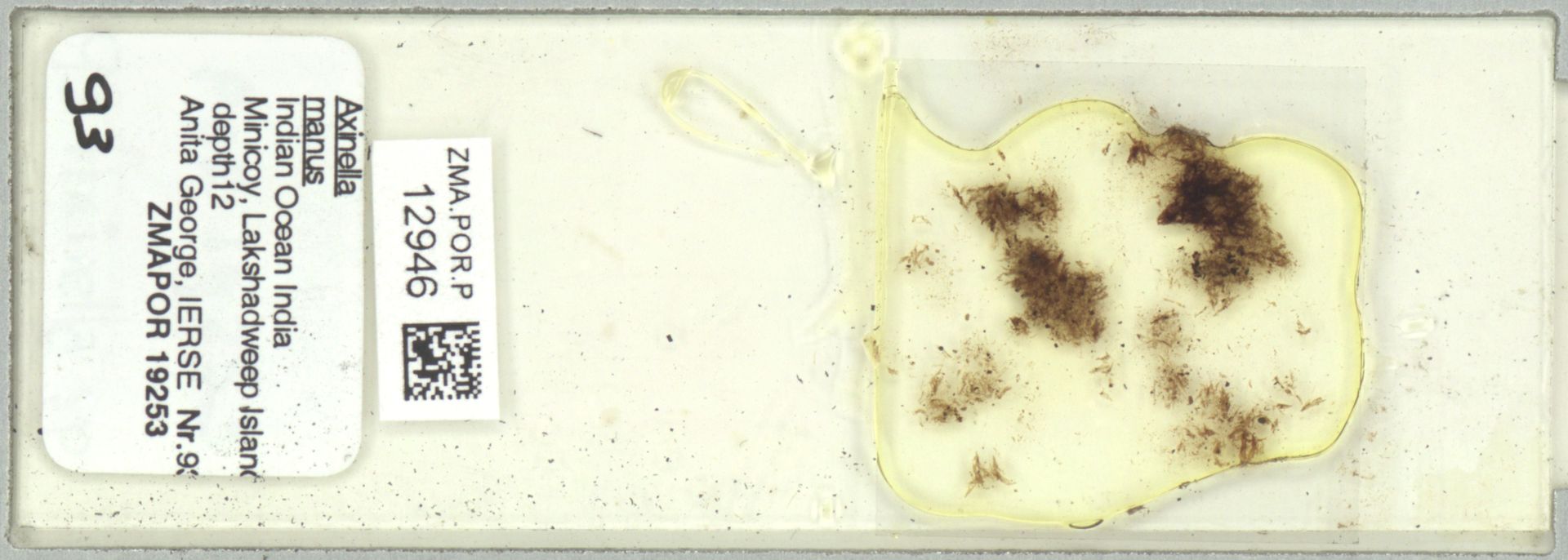
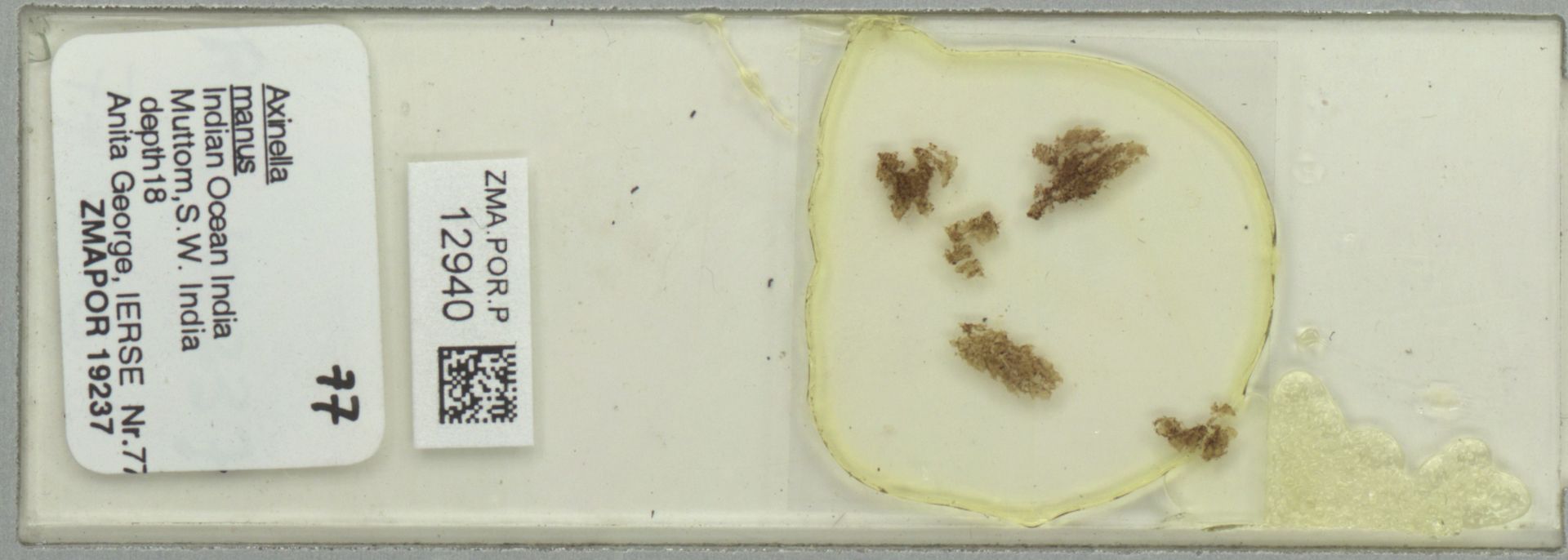
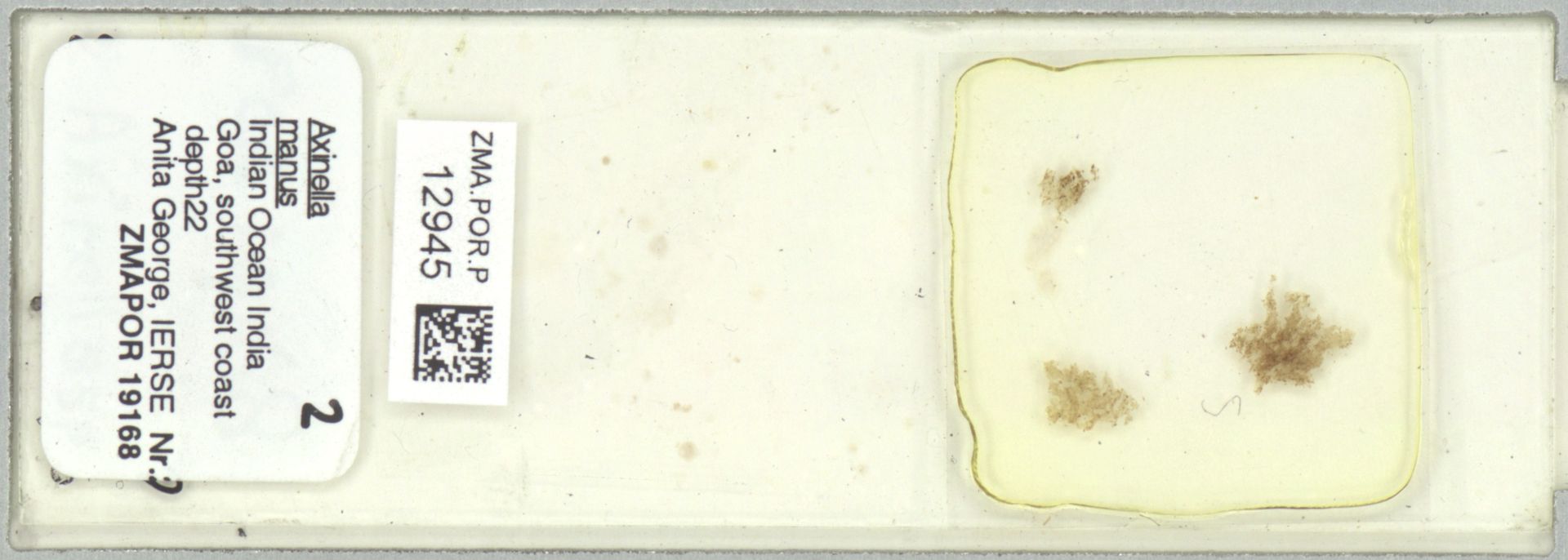
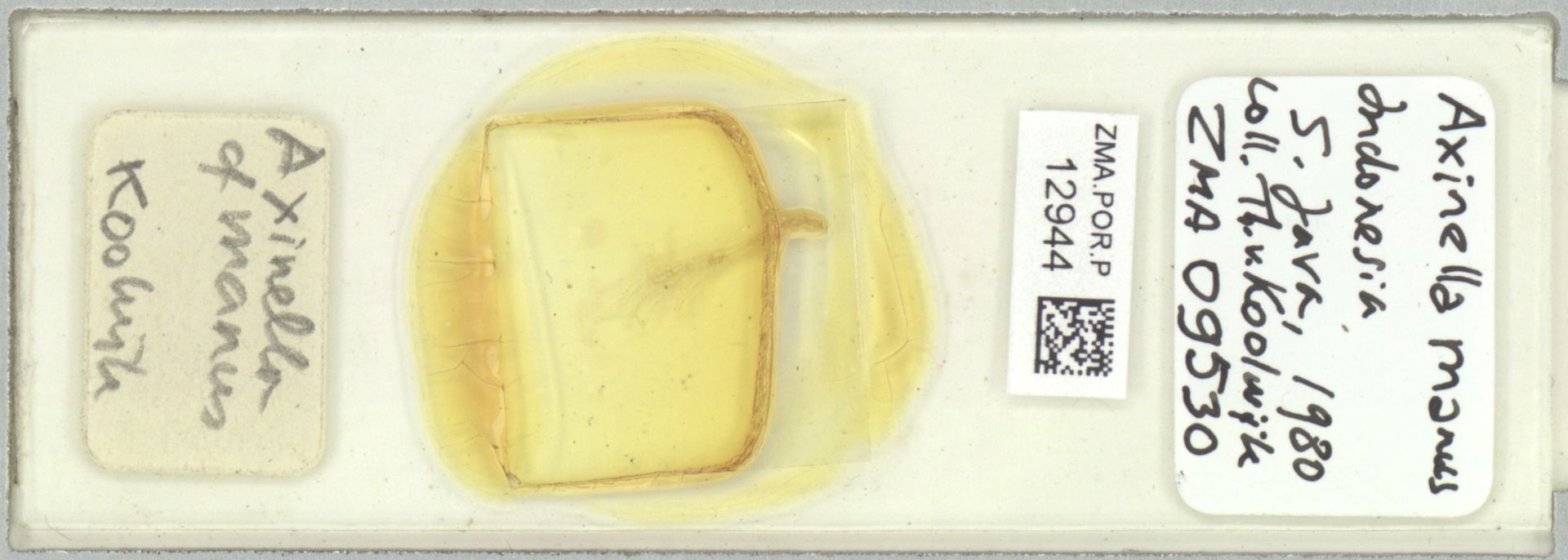
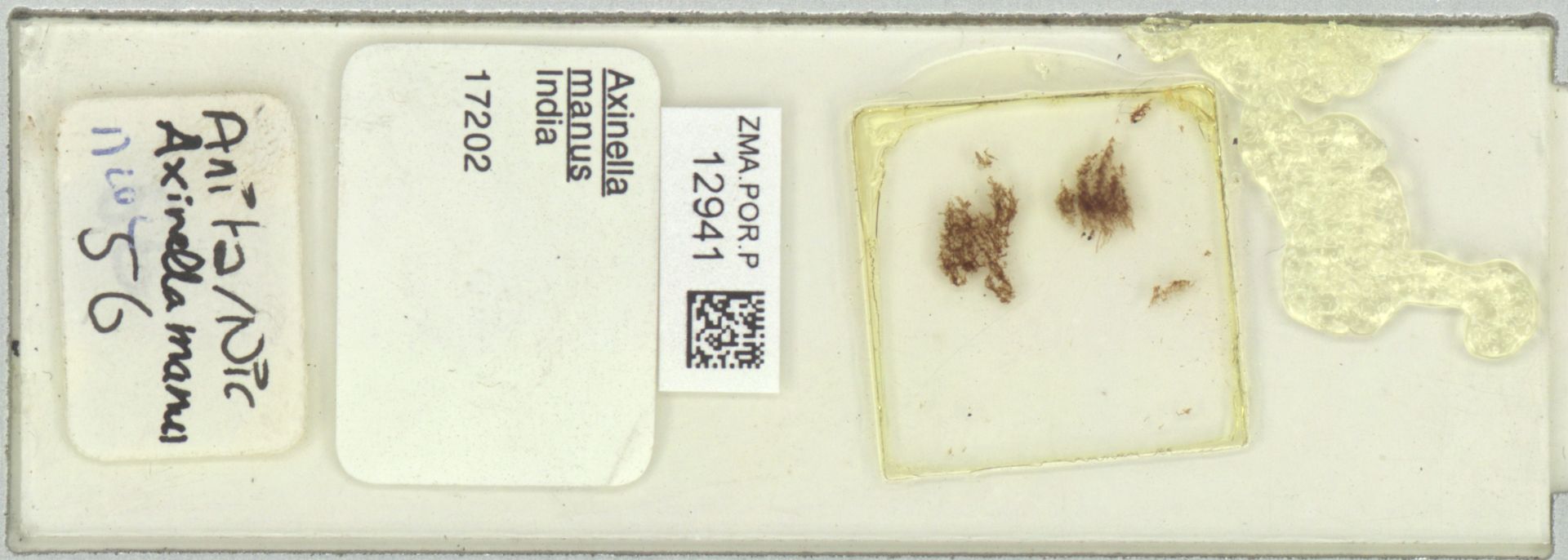
Dataset images are from museum preserved material (invertebrate zoology). Specimens show an axinellid-type macroscopic sponge habit: an irregular lobate and/or encrusting to branching external form with elevated regions on the surface (including oscula-like areas). Preserved color in the available images appears in the brown to dark-gray range.
Species-level identification from habit alone can be unreliable within Axinellidae, because multiple axinellid taxa may show overlapping “Axinella-like” external growth forms; skeletal/spicule organization is often needed for confident placement at or below the family level.
Classification Notes
In the referenced framework, Axinellidae are treated in the order Halichondrida and are characterized using a suite of characters that includes (i) absence of a specialized ectosomal skeleton, (ii) surface characteristics, (iii) choanosomal skeleton architecture, and (iv) spicule geometries.
Axinellidae are also described as morphologically diverse, spanning encrusting, massive, branching, fan-shaped, lamellate, and tubular forms; this diversity helps explain why growth form alone may not be sufficient for robust genus/species assignment.
GBIF currently lists Axinella manus Dendy, 1905 as an accepted species name.
Gallery
References
- ↑ Dataset view for Animalia / Porifera / Demospongiae / Axinellida / Axinellidae / Axinella / manus constructed from imageomics/TreeOfLife-200M records under this taxonomic path. Hugging Face Datasets. https://huggingface.co/datasets/imageomics/TreeOfLife-200M.