Austrodiplostomum
Taxonomy
- Kingdom: Animalia
- Phylum: Platyhelminthes
- Class: Trematoda
- Order: Diplostomida
- Family: Diplostomidae
- Genus: Austrodiplostomum
Austrodiplostomum is a genus of digenean trematodes within the family Diplostomidae, order Diplostomida, and class Trematoda. The genus was formally described by Szidat and Nani in 1951. It is widely distributed, with records spanning a broad range of latitudes and longitudes.[1][2][3][4]
Host Relationships
Members of the genus are known to parasitize a variety of freshwater fish, with the species Austrodiplostomum compactum (Lutz, 1928) frequently documented in the eyes of hosts such as Plagioscion squamosissimus, Geophagus surinamensis, Hoplias malabaricus, Cichla sp., Brycon guatemalensis, Poecilia petenensis, Cichlasoma grammodes, Cichlasoma geddesi, Oreochromis aureus, and Vieja fenestrata. In addition to fish, A. compactum has been identified in avian hosts, including the double-crested cormorant (Phalacrocorax auritus) and the neotropic cormorant (Nannopterum brasilianum). Piscivorous fish are considered to play a significant role in the transmission and maintenance of these parasites within their environments.[5][2]
Visual Description
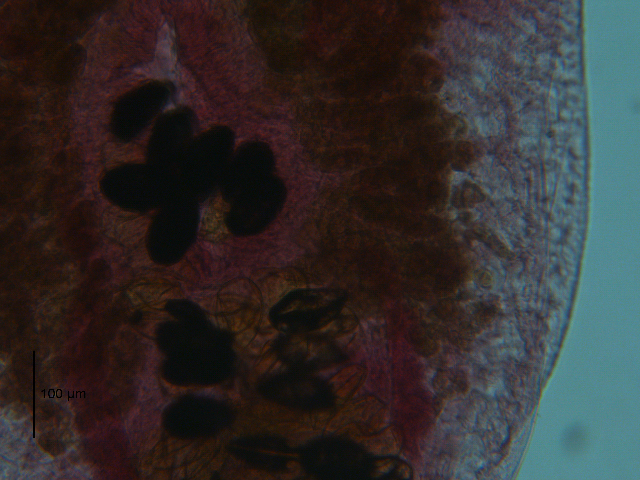
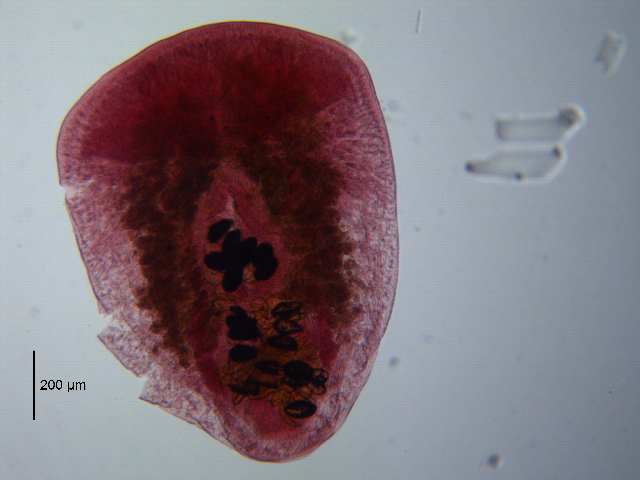
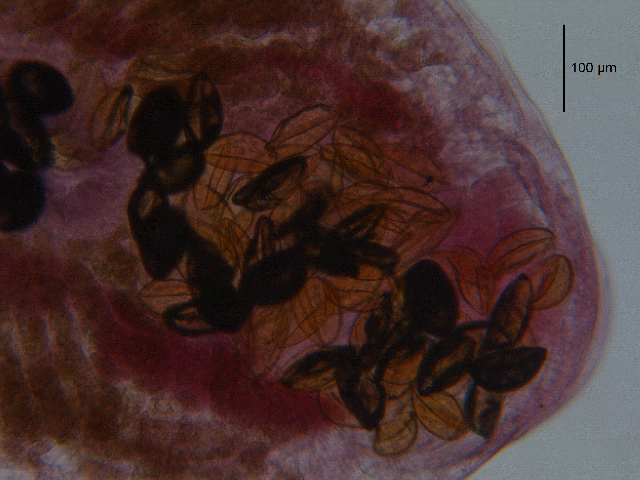
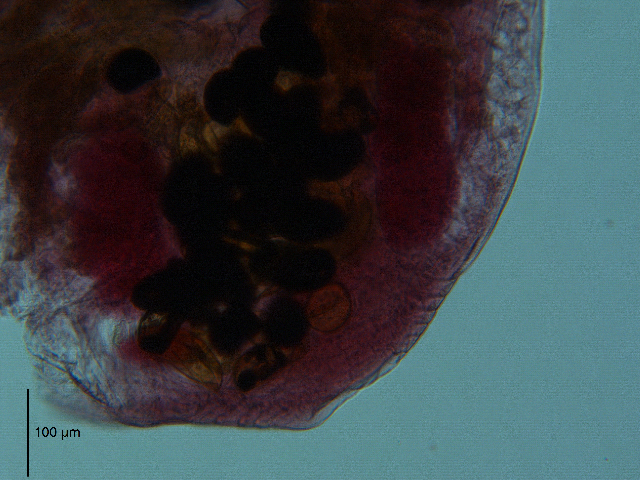
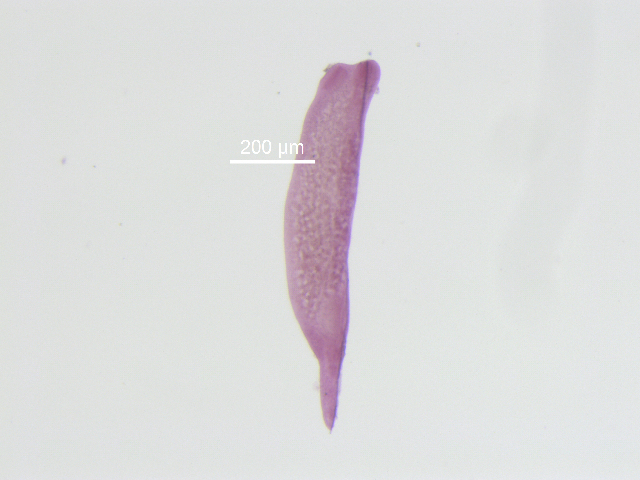
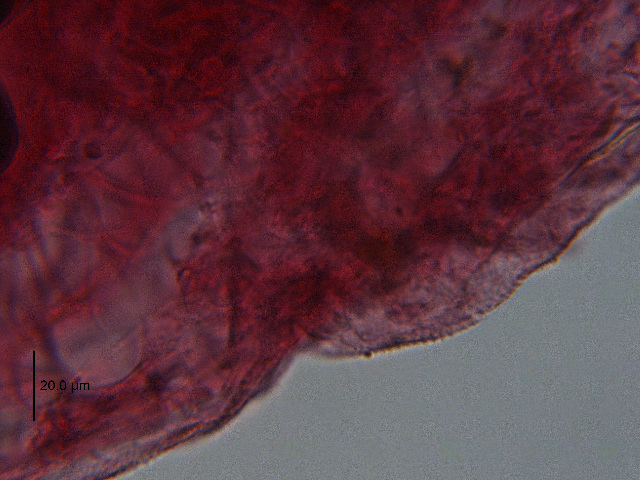
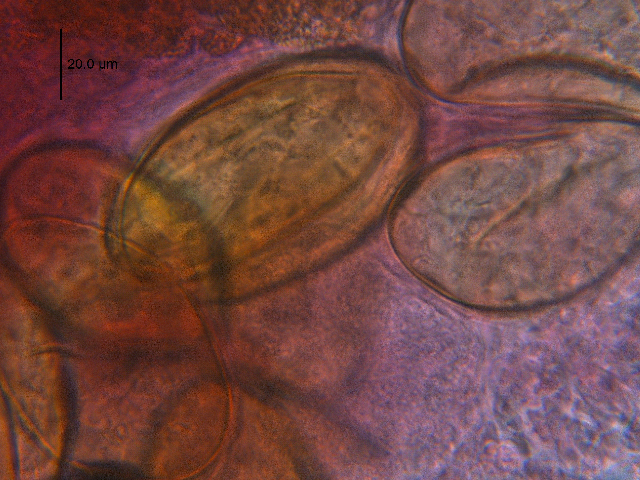
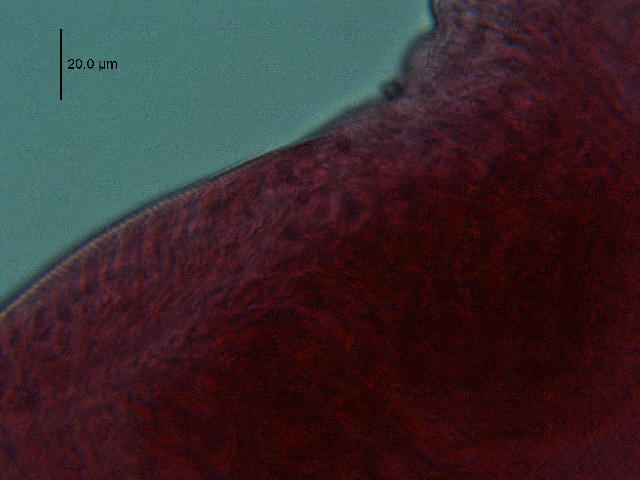
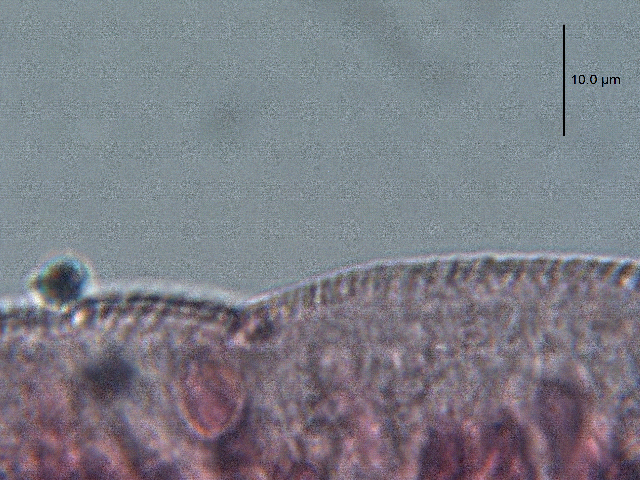
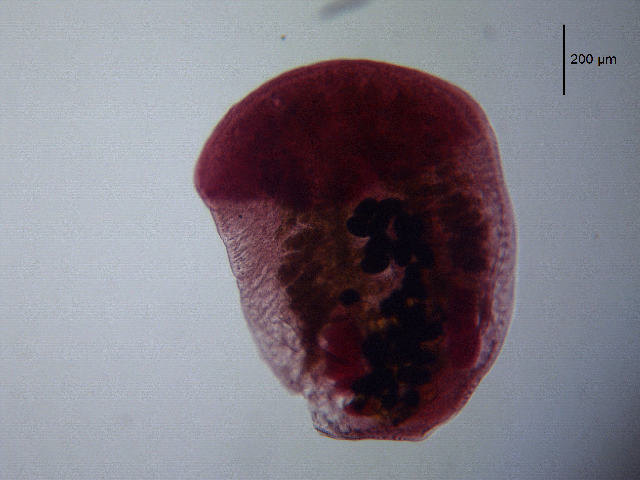
Specimens of Austrodiplostomum appear as flattened, stained trematodes, typically exhibiting an elongated, leaf-like, or pear-shaped body morphology. Microscopic examination reveals complex internal anatomy, including granular tissues and distinct, dark-stained reproductive structures or clusters of oval-shaped eggs embedded within the body matrix. The body wall and internal tissues are often visualized in deep red or pinkish-red hues in stained preparations.
Gallery
References
- ↑ Austrodiplostomum. NCBI Nucleotide. https://www.ncbi.nlm.nih.gov/nuccore/?term=txid1343081[organism:exp]. Accessed 2026-09-05.
- 1 2 Austrodiplostomum. Global Biotic Interactions. https://www.globalbioticinteractions.org/?targetTaxon=Austrodiplostomum. Accessed 2026-09-05.
- ↑ Austrodiplostomum Szidat & Nani, 1951. GBIF. https://www.gbif.org/species/4861378. Accessed 2026-09-05.
- ↑ Dataset view for Animalia / Platyhelminthes / Trematoda / Diplostomida / Diplostomidae / Austrodiplostomum constructed from imageomics/TreeOfLife-200M records under this taxonomic path. Hugging Face Datasets. https://huggingface.co/datasets/imageomics/TreeOfLife-200M
- ↑ Rosemeire de Souza Santos; Natália da Costa Marchiori; Vamilton Álvares Santarém; Haroldo Kazuyuki Takahashi; José Luiz Pedreira Mouriño; Maurício Laterça Martins. Austrodiplostomum compactum (Lutz, 1928) (Digenea, Diplostomidae) in the eyes of fishes from Paraná river, Brazil. Acta Scientiarum Biological Sciences. 2012. https://doi.org/10.4025/actascibiolsci.v34i2.9337.