Atherigona orientalis
Taxonomy
This page represents the following TreeOfLife-200M taxonomic path.[1]
- Kingdom: Animalia
- Phylum: Arthropoda
- Class: Insecta
- Order: Diptera
- Family: Muscidae
- Genus: Atherigona
- Species: Atherigona orientalis
Visual Description
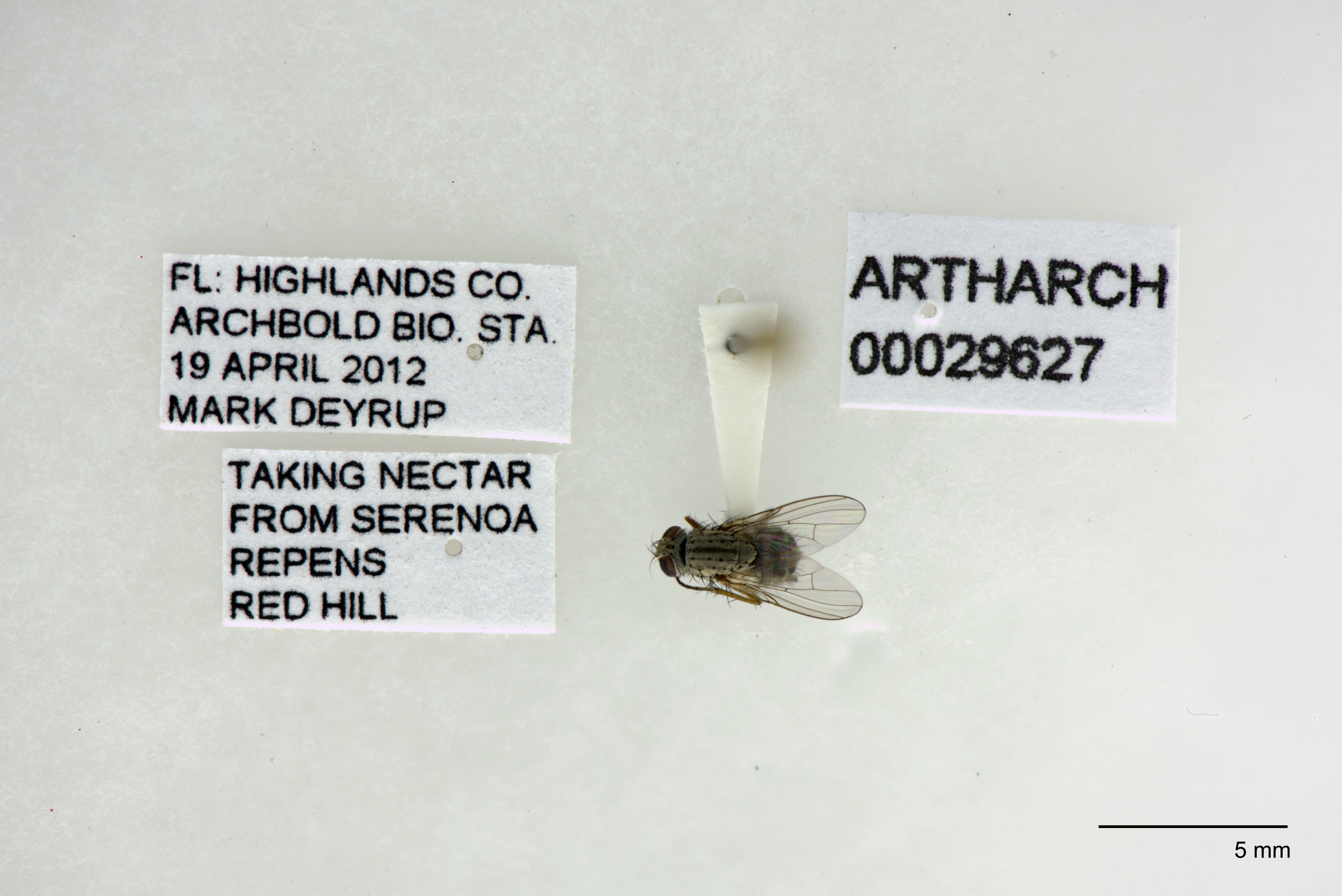
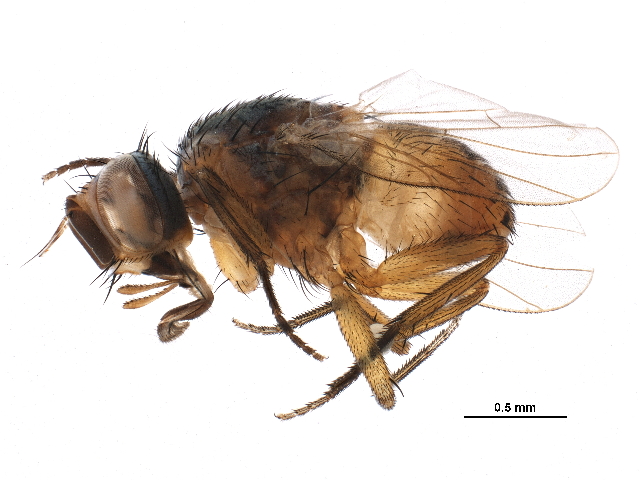
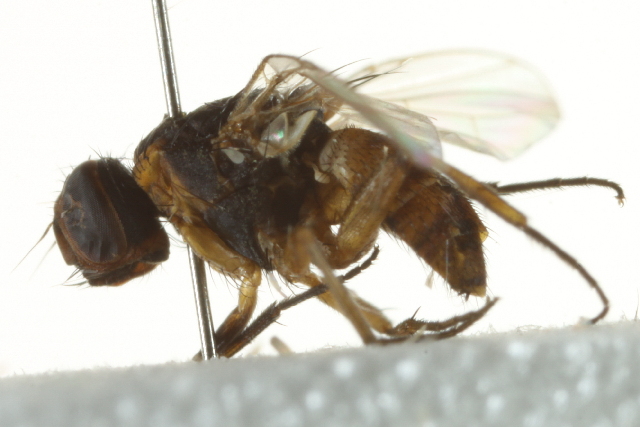
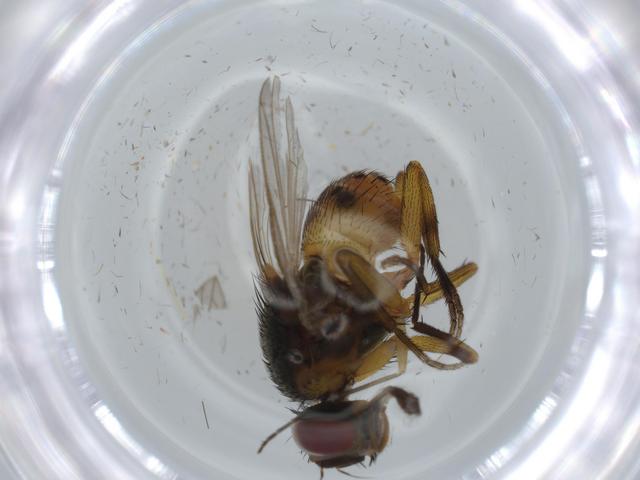
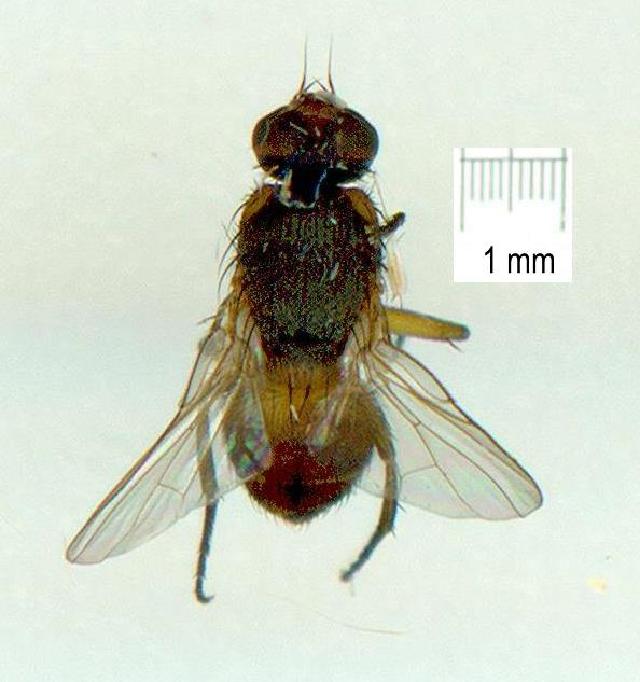
Atherigona orientalis is a small fly, typically measuring approximately 4 mm in length, with a wing length ranging from 2.5 to 3 mm.[2] The adults are characterized by a yellowish-gray coloration and a nearly square head profile.[2] Observations of specimens in the TreeOfLife-200M dataset confirm these general morphological features, including the small size and typical muscid body form.[1]
Life History and Ecology
Commonly known as the pepper fruit fly or tomato fruit fly, Atherigona orientalis is a highly polyphagous member of the family Muscidae.[2] Females do not possess a sharp, strong ovipositor; instead, they deposit eggs into existing cracks in ripening or rotting fruit, in the oviposition sites of other insects, or in carrion and feces.[2]
The species undergoes three larval instars. At 85°F, eggs hatch in approximately 12 hours, and the larval development is completed in about five days.[2] Pupation occurs in cocoons, with the pupal stage lasting approximately 6 days at 85°F. The pupae are characteristically short, broad, and range in color from dark orange to dark red.[2]
Distribution and Pest Status
Atherigona orientalis is pan-tropical, typically found within 20 degrees north and south of the equator, though it has also been reported in Australia, China, and several U.S. states, including California, Florida, Georgia, Hawaii, and Texas.[2]
While often regarded as a secondary pest or "trash fly" that attacks previously damaged fruit, it can act as a primary pest in certain regions, such as Nigeria (on bell pepper) and Australia (on tomato).[2] Due to its potential as a primary pest, it is considered of regulatory importance in countries where it is not yet established.[2]
Gallery
References
- 1 2 Dataset view for Animalia / Arthropoda / Insecta / Diptera / Muscidae / Atherigona / orientalis constructed from imageomics/TreeOfLife-200M records under this taxonomic path. Hugging Face Datasets. https://huggingface.co/datasets/imageomics/TreeOfLife-200M.
- 1 2 3 4 5 6 7 8 9 Kenneth L. Hibbard; William A. Overholt. Pepper Fruit Fly Atherigona orientalis (Schiner) (Insecta: Diptera: Muscidae). EDIS. 2012. https://doi.org/10.32473/edis-in948-2012.