Aspistomella
Taxonomy
This page represents the following TreeOfLife-200M taxonomic path.[1]
- Kingdom: Animalia
- Phylum: Arthropoda
- Class: Insecta
- Order: Diptera
- Family: Ulidiidae
- Genus: Aspistomella
Visual Description
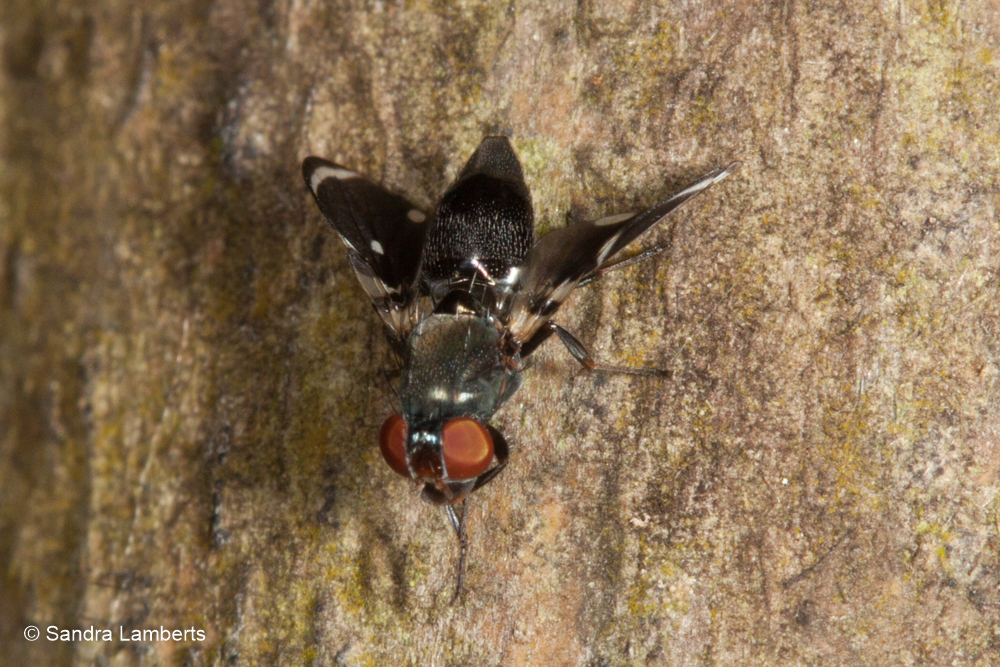
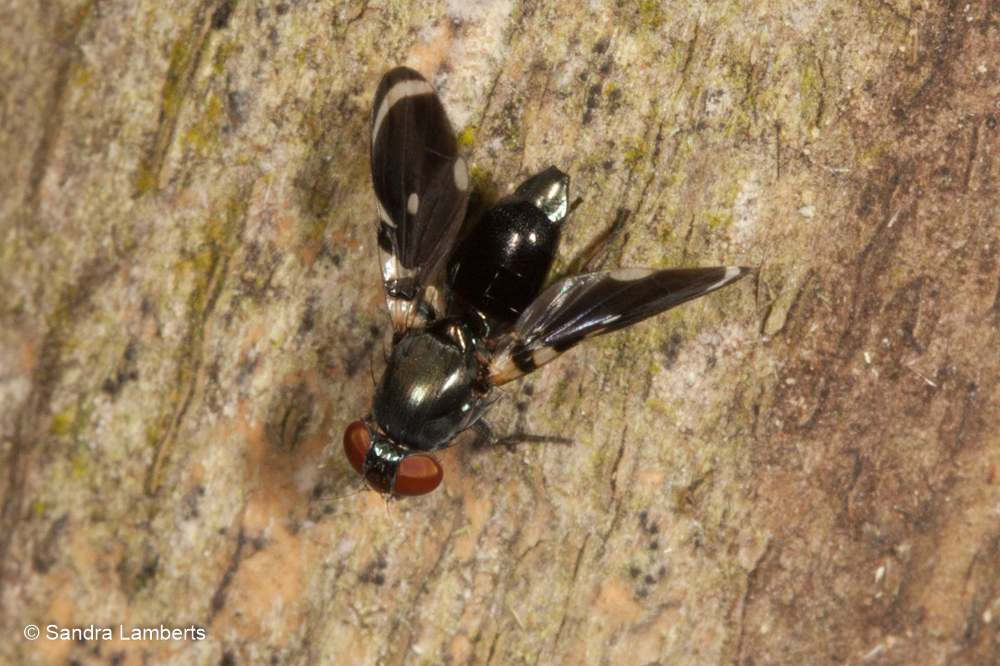
Based on observations from the TreeOfLife-200M dataset, members of the genus Aspistomella exhibit distinct morphological features characteristic of their group. The head is notable for an enlarged, anteriorly produced epistome and a low clypeus, which are diagnostic traits for this genus and its close relatives within the tribe Lipsanini.[2][1]
Biology and Ecology
The genus Aspistomella Hendel, 1909, is classified within the tribe Lipsanini (family Ulidiidae, subfamily Pterocallinae).[2] It is part of a monophyletic group of genera that also includes Polyteloptera and Ulivellia[2].
Species in this group are associated with neotropical tall grasses, specifically bamboo (Guadua) and wild cane (Gynerium).[2] Aspistomella larvae are saprophagous and adapted to an aquatic lifestyle, living within the water-filled internode cavities ("bamboo phytotelmata") of living Guadua angustifolia culms.[2] They access these interiors by utilizing existing tunnels created by lepidopteran borers (Crambidae).[2] Last-instar larvae are known to be capable of jumping and pupate in the soil.[2]
Taxonomy and Nomenclature
Aspistomella Hendel, 1909, is a senior subjective synonym of Paraphyola Hendel, 1909.[2]
Gallery
References
- 1 2 Dataset view for Animalia / Arthropoda / Insecta / Diptera / Ulidiidae / Aspistomella constructed from imageomics/TreeOfLife-200M records under this taxonomic path. Hugging Face Datasets. https://huggingface.co/datasets/imageomics/TreeOfLife-200M.
- 1 2 3 4 5 6 7 8 Damir Kovač; ELENA P. KAMENEVA; E. P. Kameneva; ALEXANDRE SANTOS ARAÚJO; MARCOANDRE SAVARIS; JOHN T. SMIT; ALEXANDER SCHNEIDER; Robert D. Schreiber; V. A. Korneyev. Revision of the Aspistomella group of genera (Diptera: Ulidiidae: Pterocallinae: Lipsanini). Zootaxa. 2024. https://doi.org/10.11646/zootaxa.5530.1.1.