Aspidogastridae
Taxonomy
Aspidogastridae is a family of trematodes within the class Trematoda and order Aspidogastrida. Established by Franz Poche in 1907, the family is classified under the phylum Platyhelminthes and includes approximately 74 descendant taxa. The family is organized into three subfamilies: Aspidogastrinae, which includes genera such as Aspidogaster, Lobatostoma, and Lophotapsis; Cotylaspidinae, containing genera like Cotylapsis and Cotylogaster; and Rohdellinae, represented by the genus Rohdella.[1][2][3][4]
Species within this family are parasites of various hosts, including bivalve mollusks, such as members of the Unionidae, and fish like Aplodinotus grunniens and Mylopharyngodon piceus. Infestation by these trematodes can induce pathological changes in mollusk hosts, including cytoplasmic vacuolization, connective tissue damage, and hypertrophy of the pericardial epithelium. These infections may also influence the host's cardiac index and heart rate, with moderate infestations potentially increasing heart rate and high infestations leading to a decrease. The family exhibits a broad geographic distribution, with records spanning a wide range of latitudes and longitudes.[1][5][2]
Visual Description
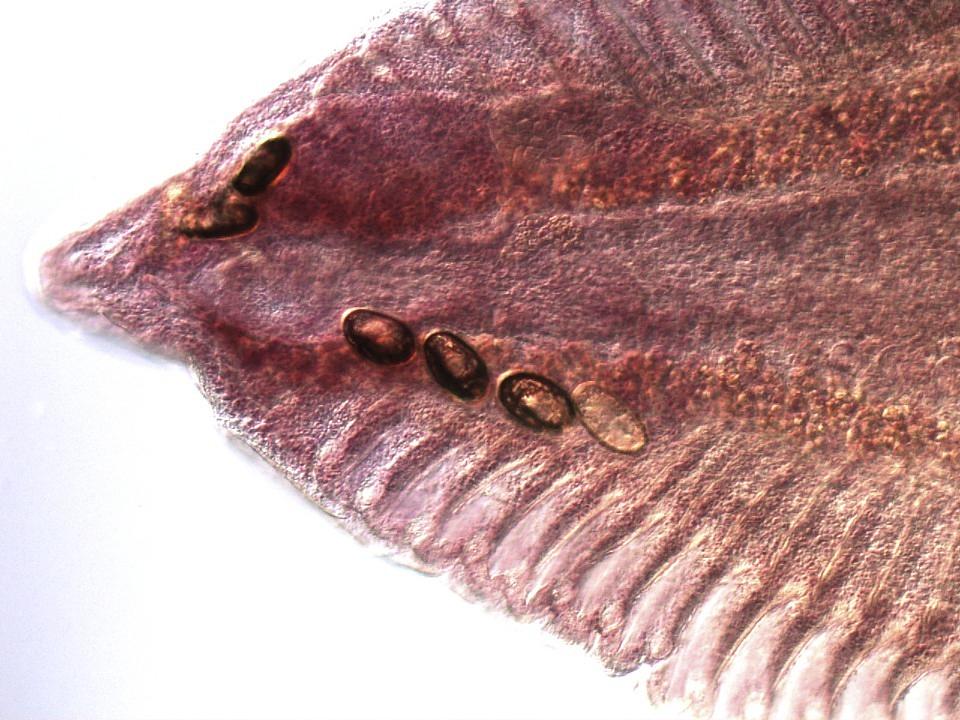
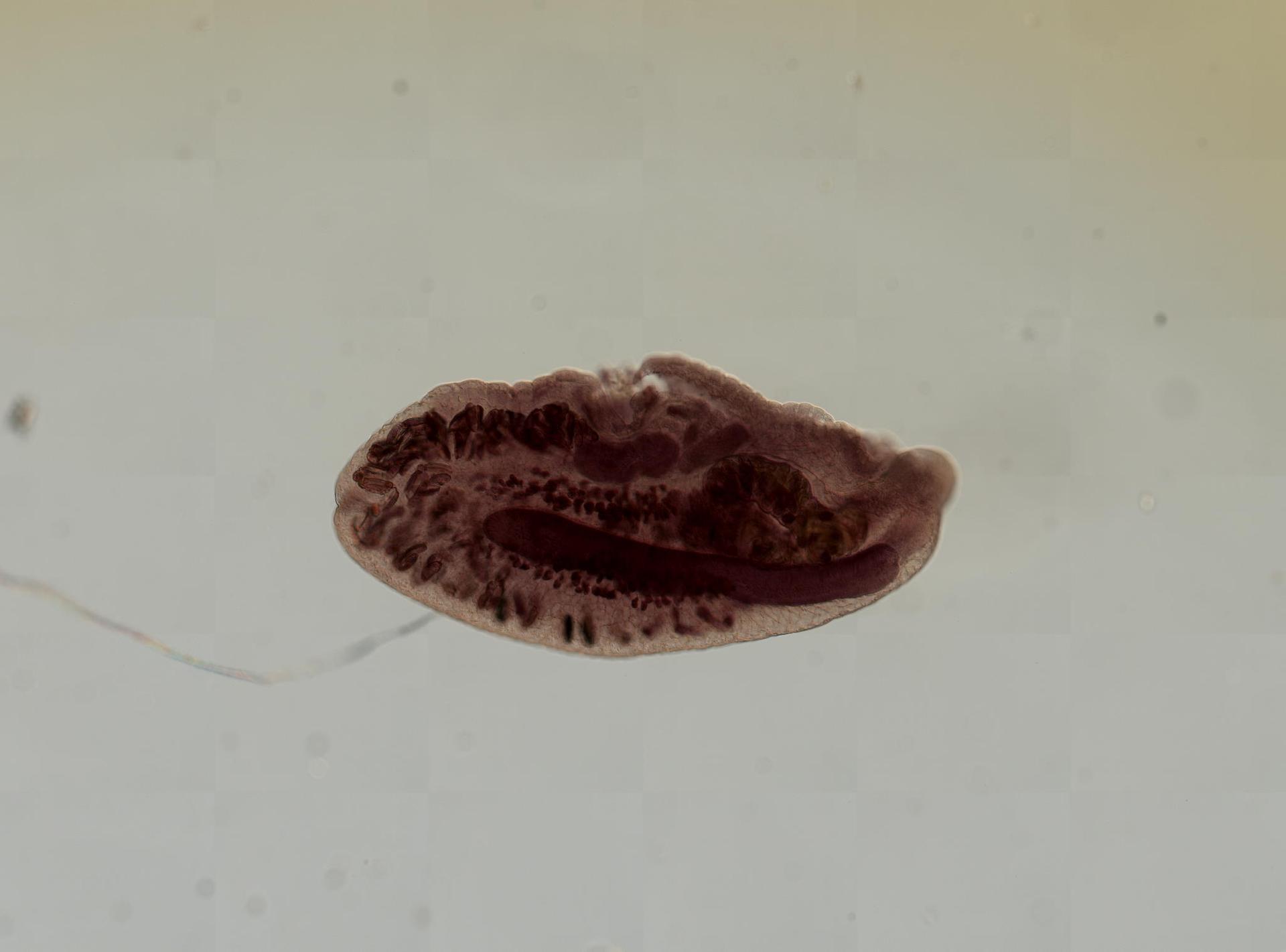
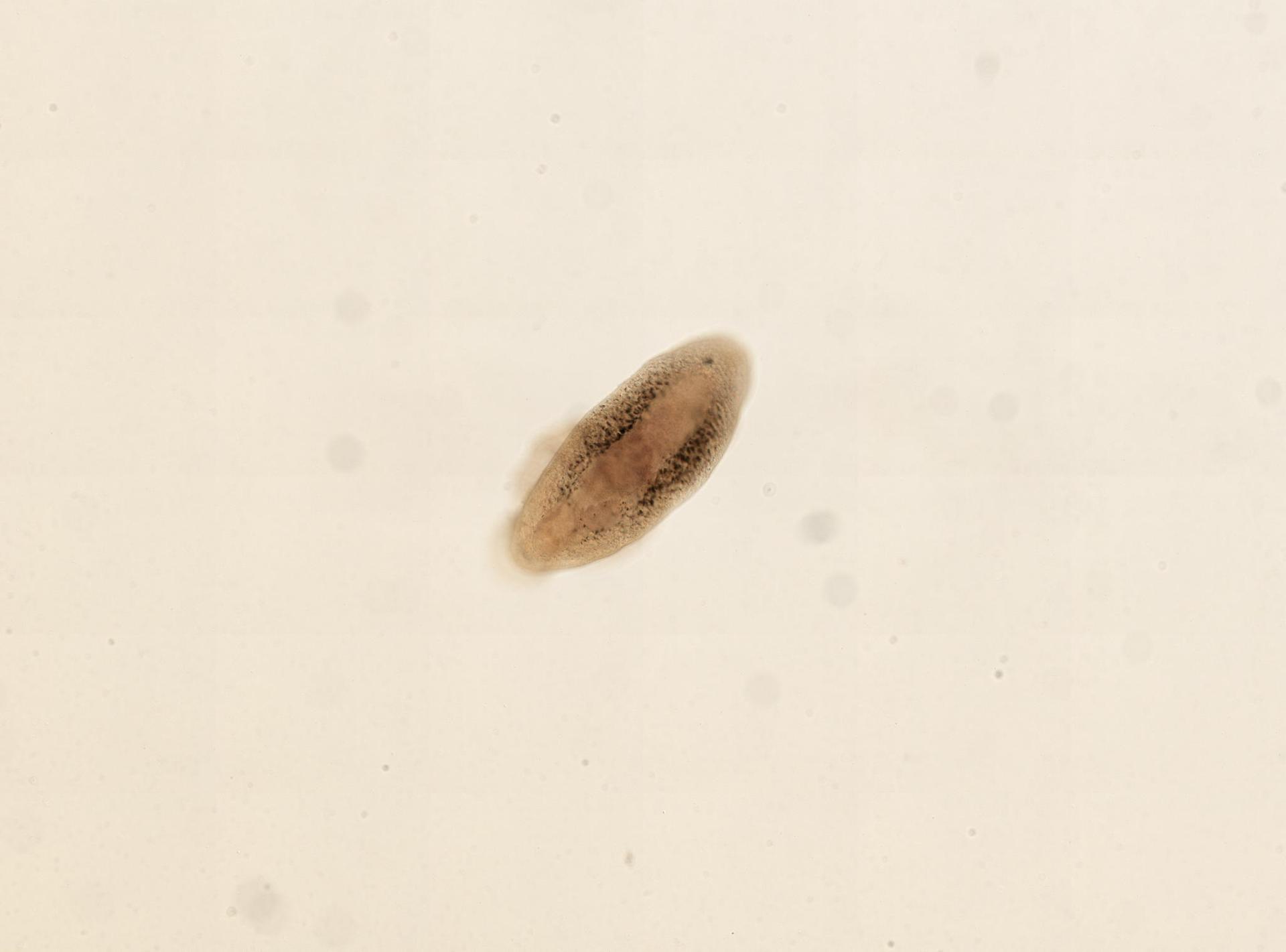
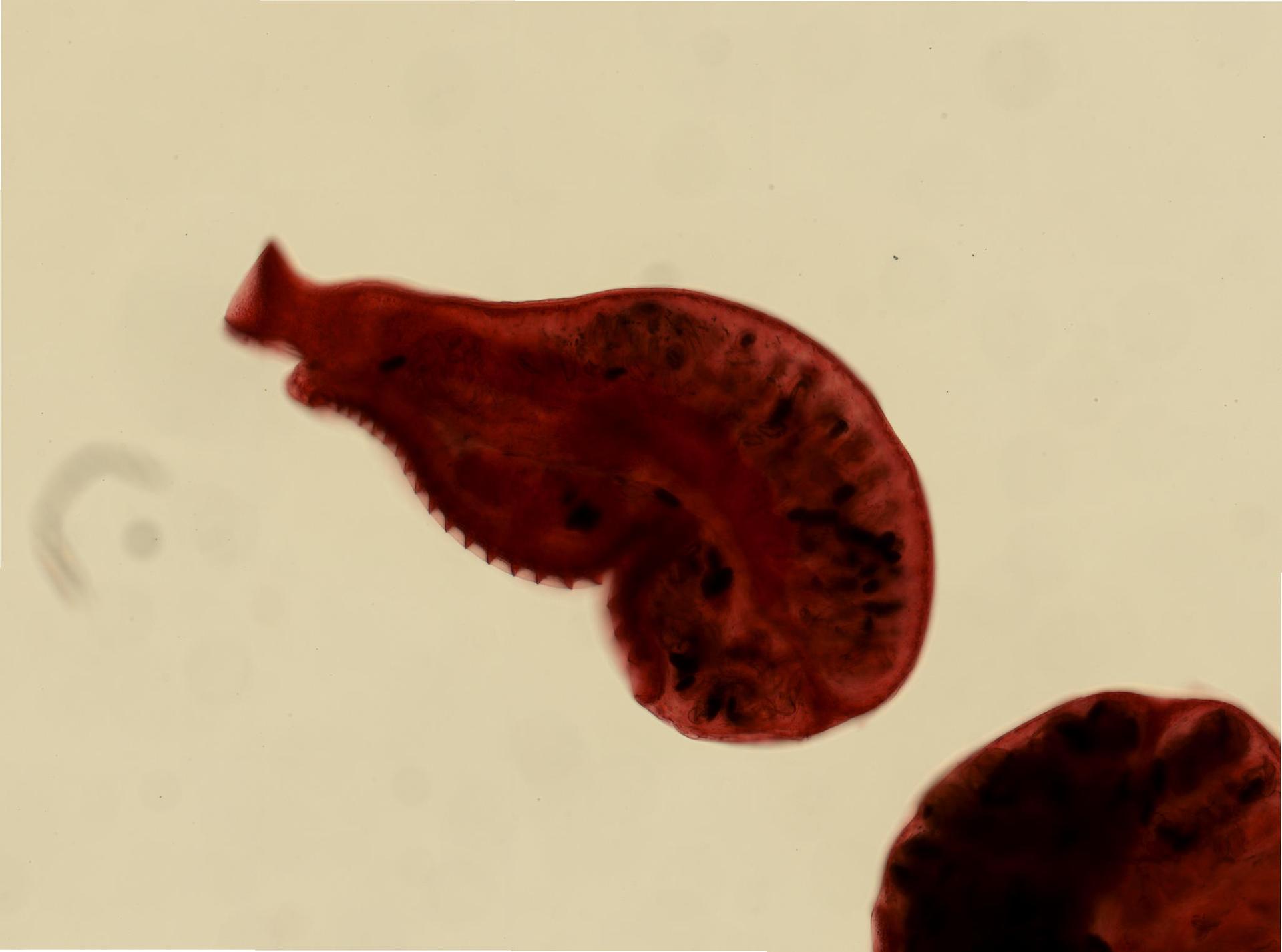
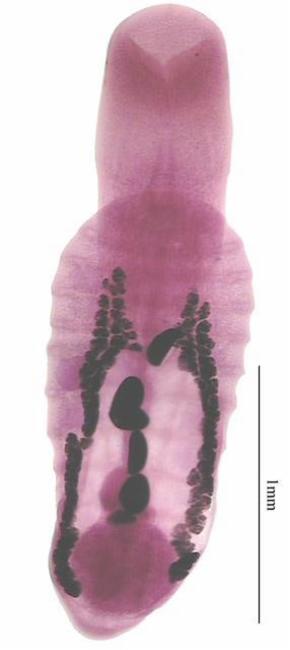
Aspidogastrids are characterized by an elongated, often oval-shaped body, frequently featuring a prominent ventral adhesive disc. This disc is typically marked by a series of regular, parallel, rib-like structures along the margin. Internal morphology, visible in stained specimens, includes complex reproductive and digestive organs, such as a central longitudinal intestine. Some species exhibit a distinct, pointed anterior end and a broader posterior region, with internal structures appearing as mottled or dark, complex areas within the body.
Gallery
References
- 1 2 Aspidogastridae. Global Biotic Interactions. https://www.globalbioticinteractions.org/?targetTaxon=Aspidogastridae. Accessed 2026-09-05.
- 1 2 Aspidogastridae. GBIF. https://www.gbif.org/species/4975. Accessed 2026-09-05.
- ↑ Aspidogastridae. Wikipedia. https://en.wikipedia.org/wiki/Aspidogastridae. Accessed 2026-09-05.
- ↑ Dataset view for Animalia / Platyhelminthes / Trematoda / Aspidogastrida / Aspidogastridae constructed from imageomics/TreeOfLife-200M records under this taxonomic path. Hugging Face Datasets. https://huggingface.co/datasets/imageomics/TreeOfLife-200M
- ↑ O. Pavluchenko; Tetyana Yermoshyna. Parasites of unionid molluscs (Bivalvia, Unionidae) and their effect on the body of molluscs. Regulatory Mechanisms in Biosystems. 2017. https://doi.org/10.15421/021774.