Aspidogastrida
Taxonomy
Aspidogastrida is an order of trematodes (flukes) within the subclass Aspidogastrea and the phylum Platyhelminthes. The order is classified under the superfamily Aspidogastrioidea and currently encompasses 85 descendant taxa. Recognized families within the order include Aspidogastridae, Multicalycidae, and Rugogastridae. The order exhibits a broad global distribution, with recorded occurrences spanning latitudes from approximately 42°S to 57°N.[1][2]
Species within this order are known to parasitize a diverse range of hosts. Bivalve mollusks, particularly those in the family Unionidae such as *Pyganodon grandis*, *Lampsilis*, *Elliptio complinata*, *Quadrula undulata*, *Anodonta cataracta*, *Potamilus alatus*, and *Quadrula quadrula*, serve as common hosts. They also infect various fish species, including *Aplodinotus grunniens* and *Mylopharyngodon piceus*, as well as turtles such as *Pelodiscus sinensis*. Representative species include *Aspidogaster conchicola*, *Lobatostoma ringens*, *Sychnocotyle kholo*, and *Cotylogasteroides occidentalis*.[3][4][5]
Visual Description
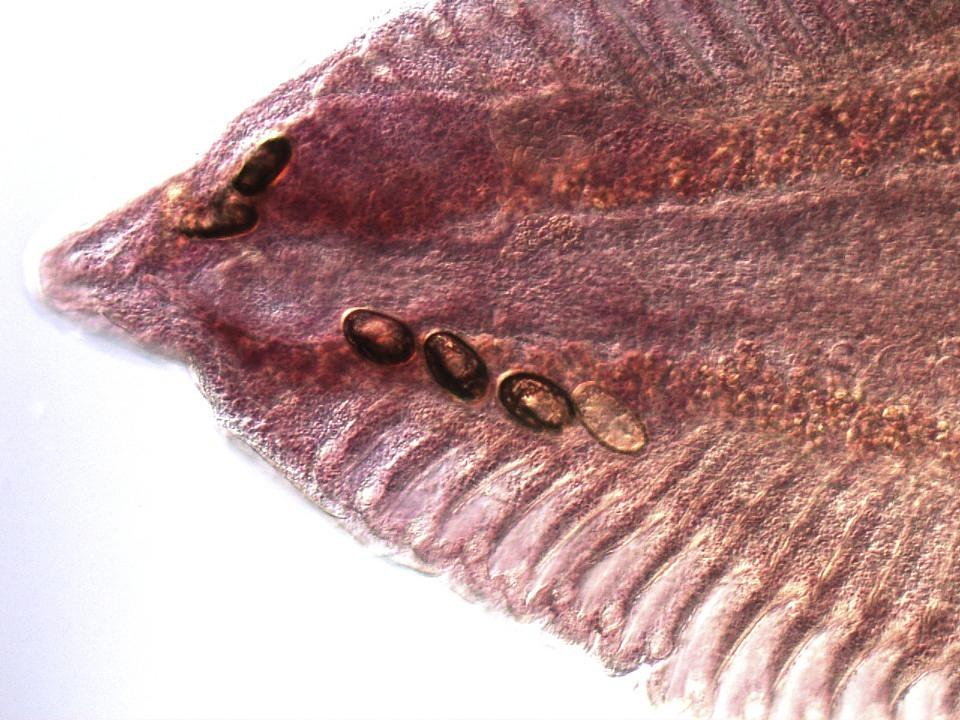
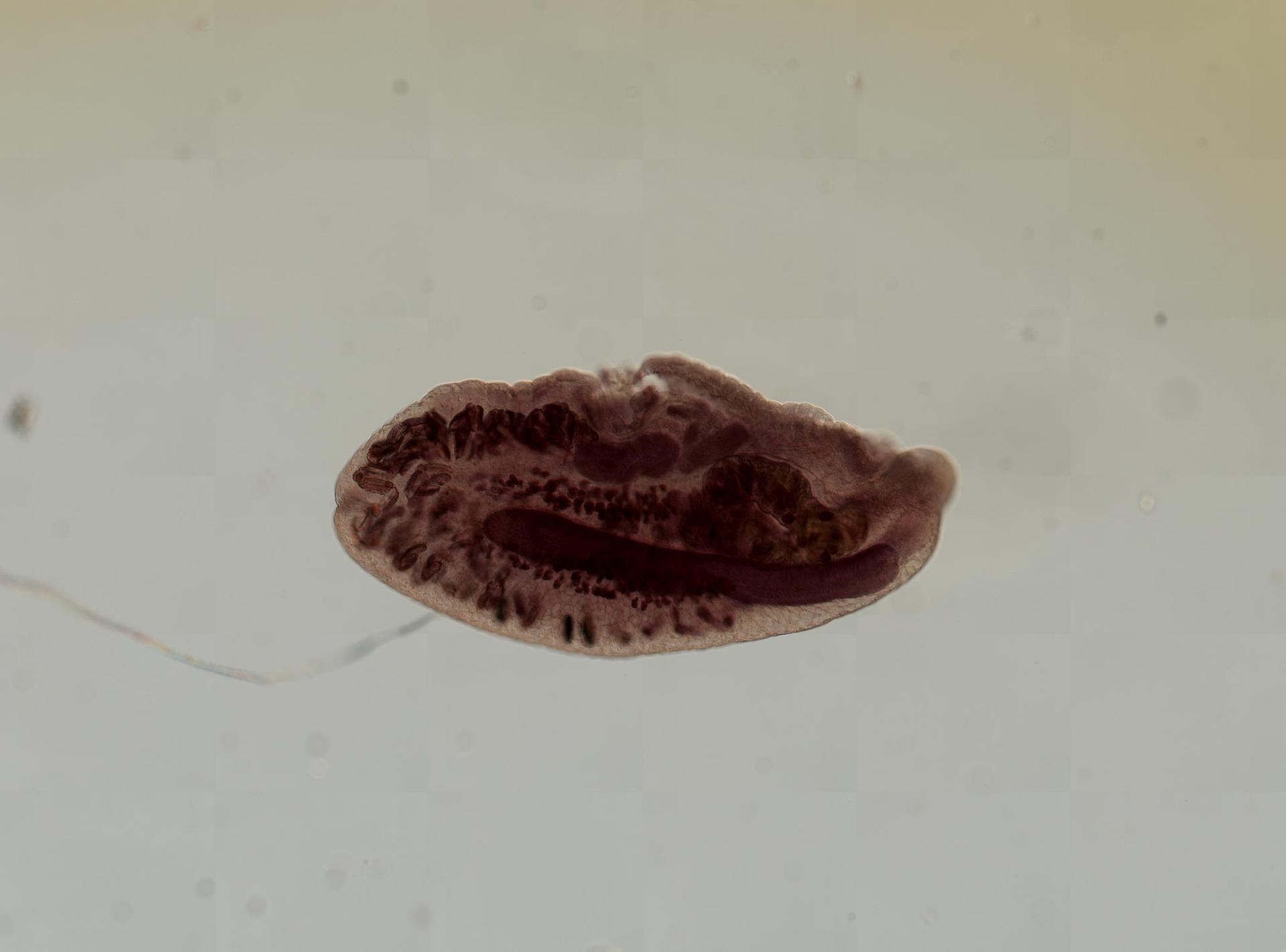
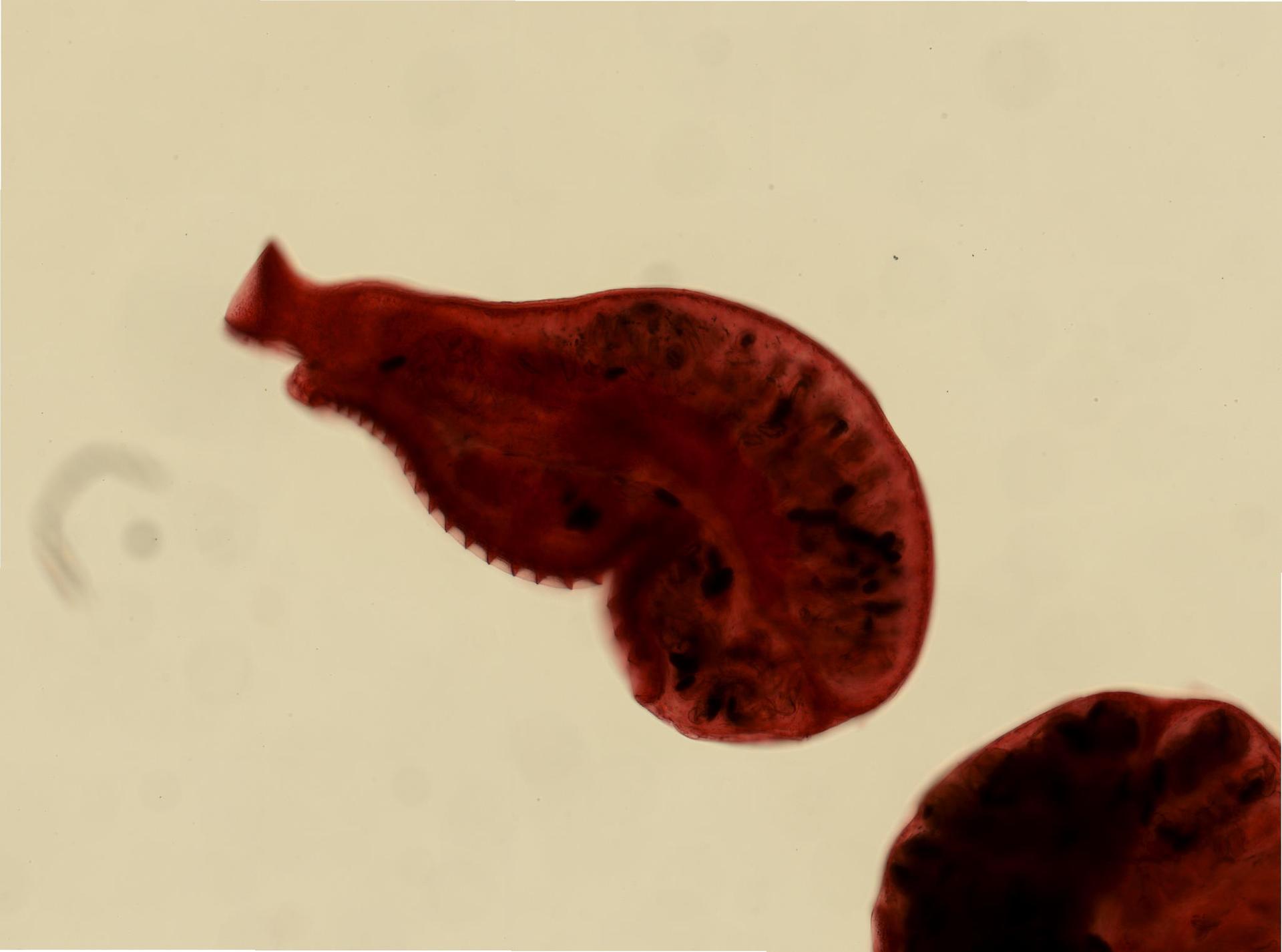
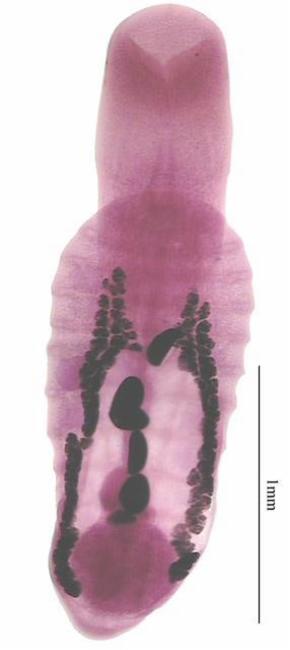
Aspidogastrids typically possess an elongated, flattened, and often oval-shaped body. A defining morphological feature is the prominent ventral adhesive disc, or haptor, which occupies a significant portion of the ventral surface. This disc is characterized by a series of distinct, transverse, muscular ridges or alveoli. Internal anatomy, including reproductive structures and eggs, is often visible through the body wall in stained or microscopic preparations.
Gallery
References
- ↑ Aspidogastrida. Wikipedia. https://en.wikipedia.org/wiki/Aspidogastrida. Accessed 2026-09-05.
- ↑ Aspidogastrida. GBIF. https://www.gbif.org/species/7377566. Accessed 2026-09-05.
- ↑ Aspidogastrida. Global Biotic Interactions. https://www.globalbioticinteractions.org/?targetTaxon=Aspidogastrida. Accessed 2026-09-05.
- ↑ Pham Ngoc Doanh. Trematode species of the order Aspidogastrida parasiting in turtle Pelodiscus sinensis (Wiegmann, 1834) in Vietnam. TAP CHI SINH HOC. 2012. https://doi.org/10.15625/0866-7160/v28n1.826.
- ↑ Dataset view for Animalia / Platyhelminthes / Trematoda / Aspidogastrida constructed from imageomics/TreeOfLife-200M records under this taxonomic path. Hugging Face Datasets. https://huggingface.co/datasets/imageomics/TreeOfLife-200M